
Last updated November 24, 2026
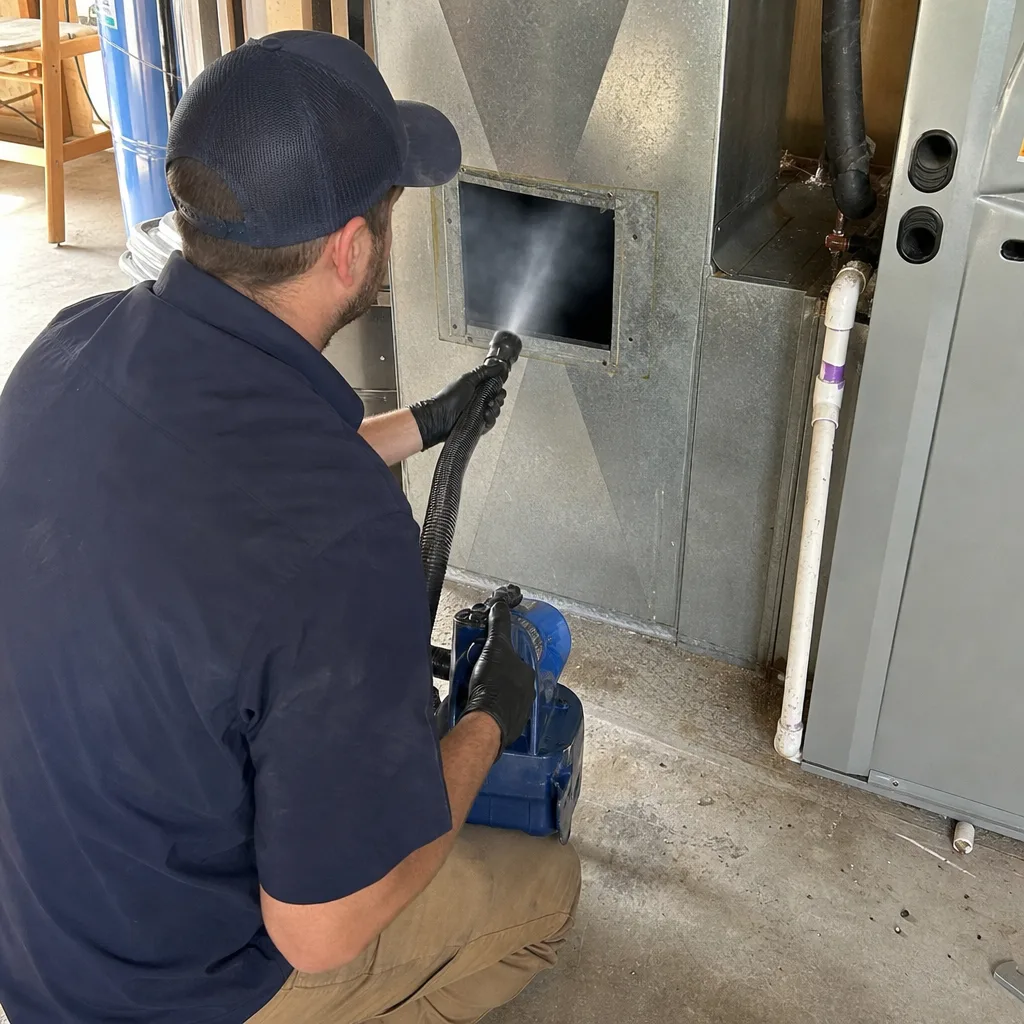
 Whole-home duct cleaning
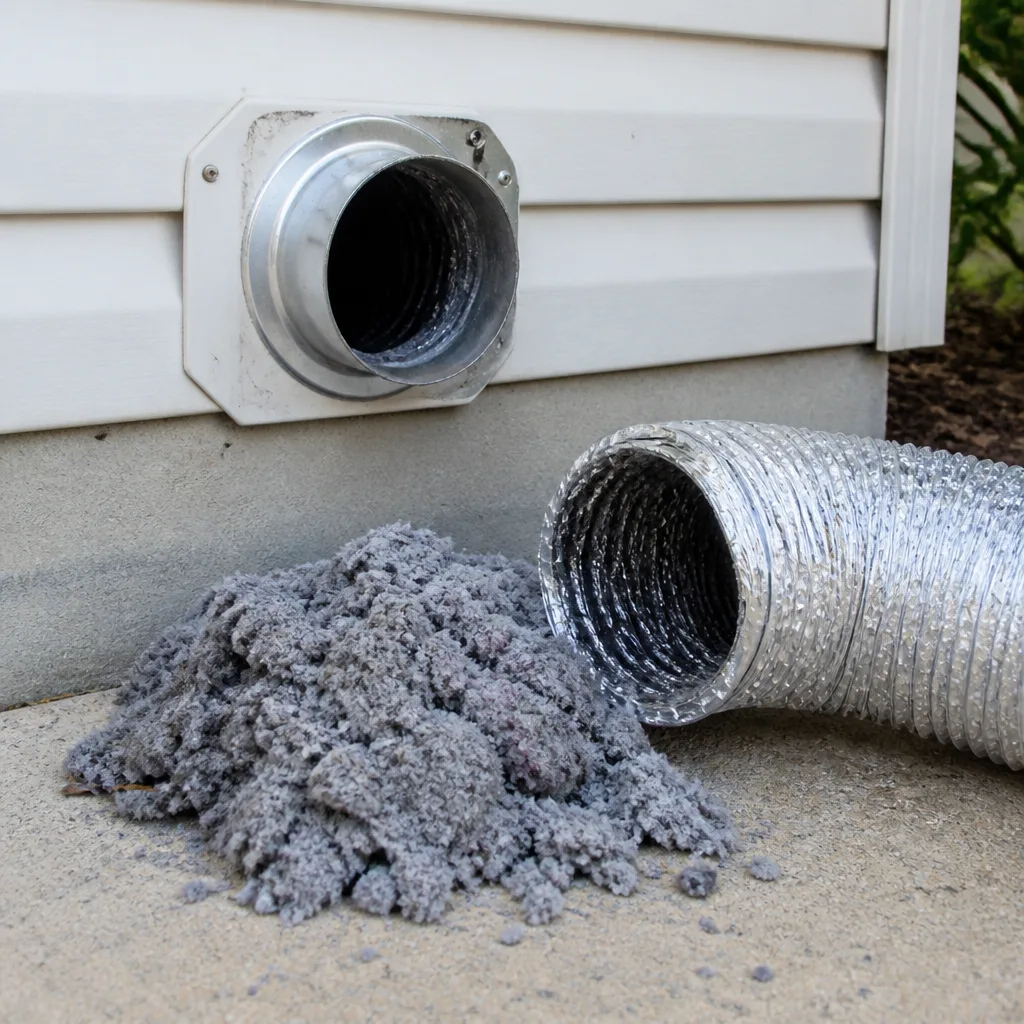 Dryer vent cleaning
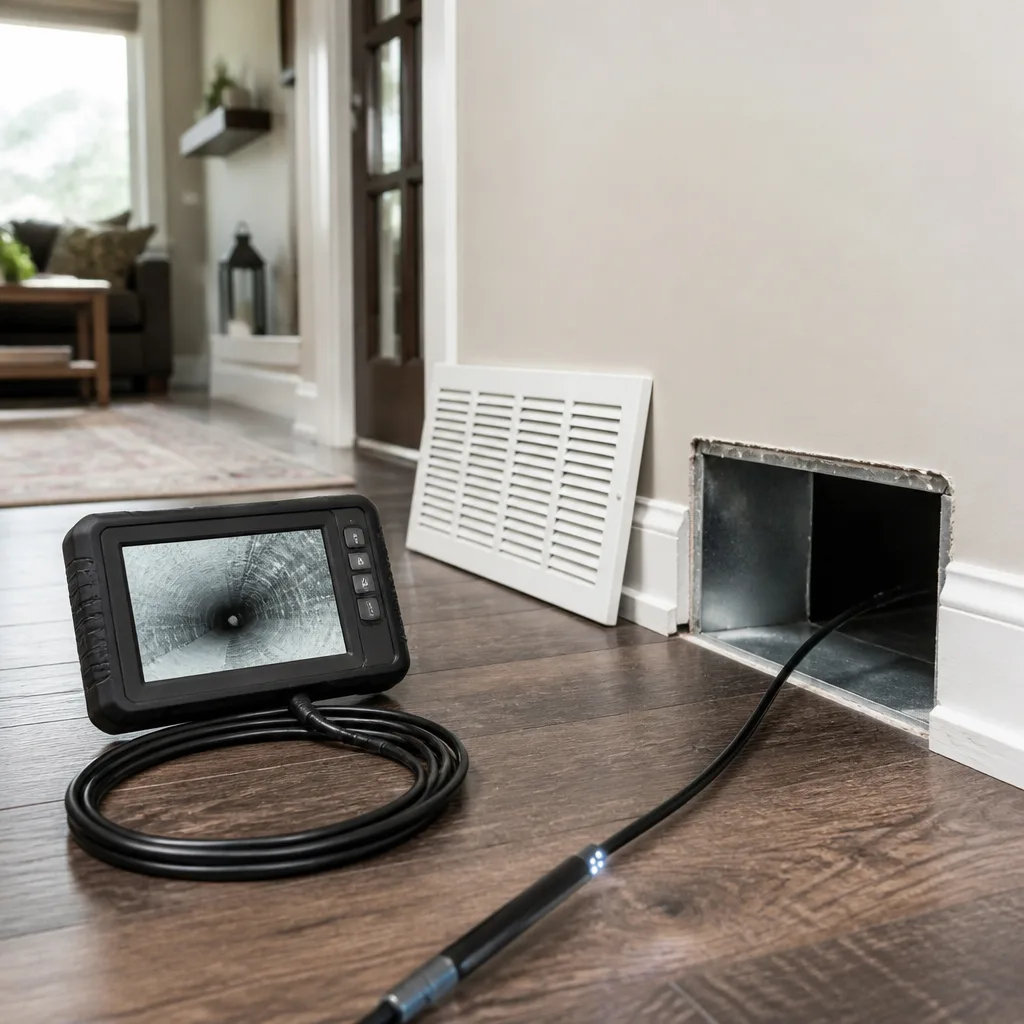 Camera inspection
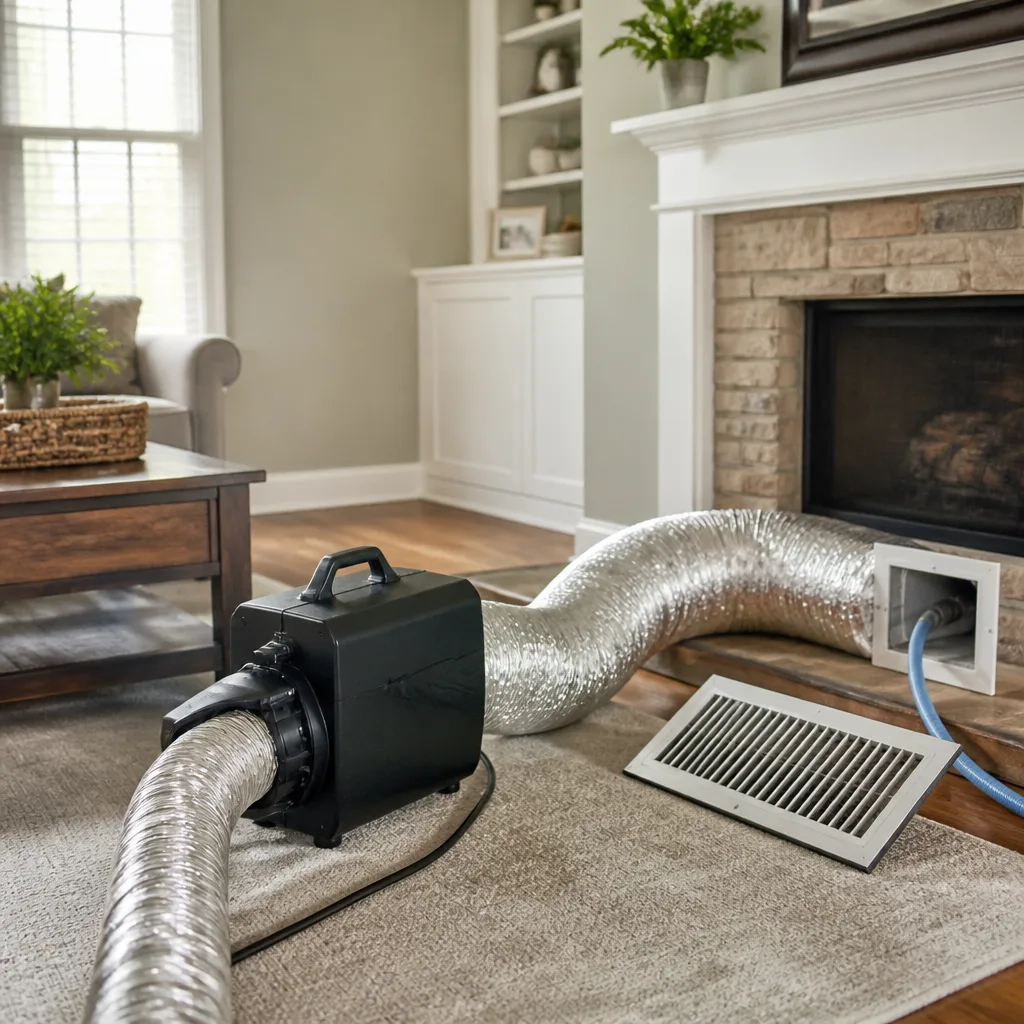 Sanitizing & deodorizing
Whole-system duct and dryer vent check with before-and-after photos - you see exactly what came out of your vents
That "$99 whole-house special" is a bait ad - the real number appears once they are in your hallway, or the "clean" is a shop-vac at the register. We photograph the inside of your ducts before and after instead.
DIY vs Professional Air Duct Cleaning: The Hampden Homeowner’s Decision Guide
Most duct cleaning advice treats the choice as obvious: hire a pro or risk making things worse. That framing hides the useful part. DIY duct cleaning isn’t dangerous in most homes, it’s just structurally limited, and the limit is measurable. A consumer-grade shop vac pulls roughly 60 cubic feet per minute of suction. A truck-mounted professional unit pulls 15,000 CFM or more. That gap of roughly 250 times explains why a homeowner with a shop vac tends to push dust into the room rather than capture it at the source. Knowing exactly where your own tools stop working is what saves you money. This guide draws that line for homeowners across Hampden, so you know which tasks you can genuinely handle and which ones waste your weekend.
Quick Answer
You can legitimately handle register cleaning, filter changes, dryer vent lint removal, and wiping down filter housings yourself. You should hire a professional for anything involving the duct interior, trunk lines, mold, or post-renovation debris, because no consumer tool reaches the suction needed to remove contamination at the source. In Hampden, homes built before 1980 with lined ducts deserve a professional assessment before anyone reaches inside, since disturbed insulation can turn a cleaning job into a containment problem.
Styles & brands we work with
- Whole-home duct cleaning
- Dryer vent cleaning
- Camera inspection
- Sanitizing & deodorizing
Table of Contents
- Why Suction CFM Is the Only Number That Matters
- What You Can Legitimately Do Yourself in Hampden
- Where DIY Stops Working
- How DIY Attempts Make Professional Cleaning Harder
- Hampden’s Older Homes: The Asbestos and Fiberglass Question
- The Decision Matrix: Home Size, Duct Age, and Contamination Type
- What a Professional Duct Cleaning Actually Involves
- The Cost Reality of Doing It Yourself vs Hiring
Why Suction CFM Is the Only Number That Matters
Cubic feet per minute, or CFM, is the volume of air a vacuum moves per minute. Every duct cleaning discussion eventually lands on it, because in a closed tube full of settled debris, air volume is the whole game. Source removal means capturing the loose material and carrying it out of the system while it’s under negative pressure, so nothing re-enters the living space. Suction that’s too weak doesn’t capture, it agitates.
Think about what a shop vac actually does in a duct. You insert the hose, turn it on, and 60 CFM draws a small stream of air through a ten-inch main trunk. The debris farther down doesn’t move toward the nozzle. It lifts, swirls, and drifts back into rooms through the nearest supply register. That’s why homeowners sometimes describe their home as dustier after a DIY attempt than before. Nothing was captured, it was just relocated.
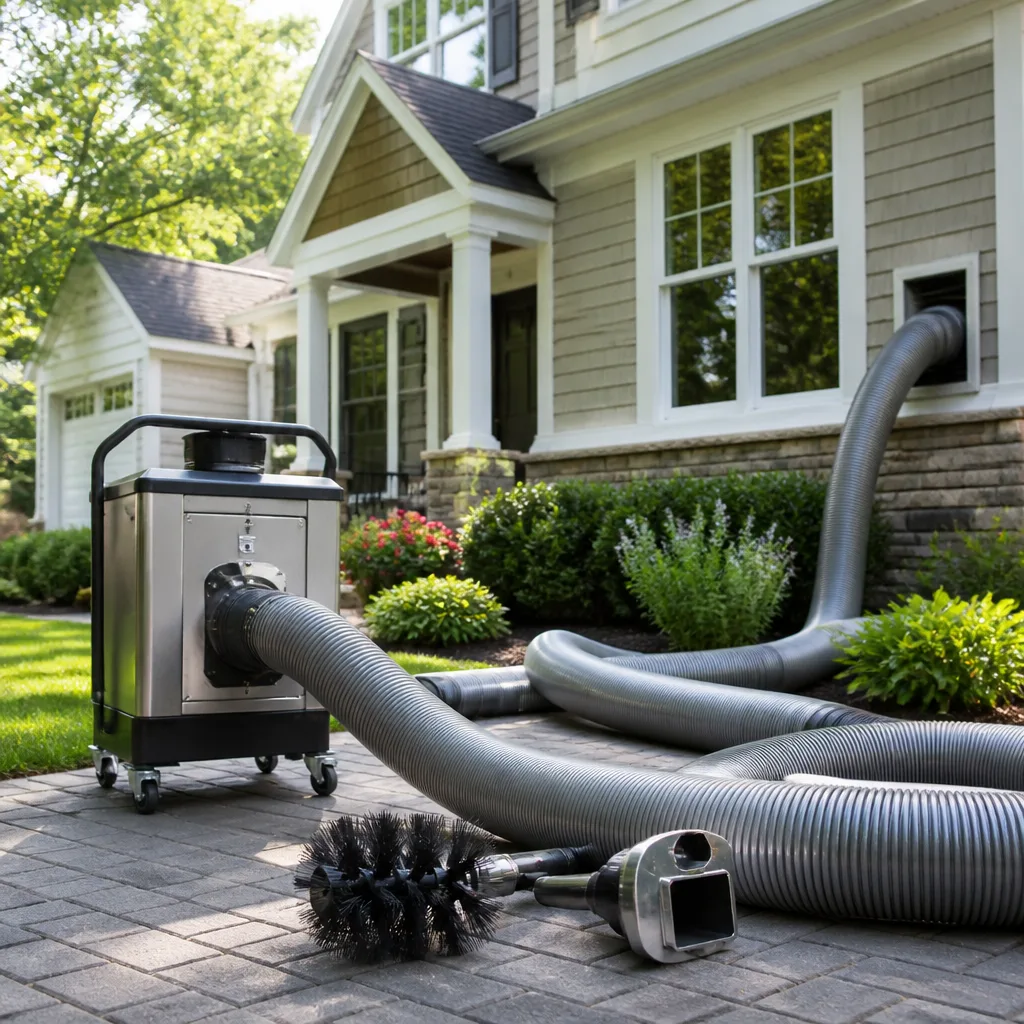
Professional equipment solves this with two variables at once. A Nikro HEPA vacuum rig holds deep negative pressure across the whole system, and HEPA filtration means anything the air stream carries is captured at the machine, not in your living room air. A Rotobrush rotary brush system adds the mechanical half: a spinning brush that contacts the duct wall and sweeps material loose so the airflow can carry it away.
That combination, high-volume suction plus wall contact, is what defines source removal. It’s also standard equipment in commercial and restoration environments, because the problem there is the same at a bigger scale. Consumer tools aren’t designed badly. They’re designed for a different job.
Our technicians use exactly this equipment pair on every system, and our technicians have up to 14 years of experience reading what a duct system actually needs once the access panel is open.
What You Can Legitimately Do Yourself in Hampden
This is the part most guides skip. There are real, useful tasks a homeowner can do without professional gear, and doing them consistently makes professional visits shorter and more effective. Nothing in this list requires more than basic tools.
- Change and vacuum your filters. Filters are the front line. A filter loaded with dust forces your blower to work harder and pushes more fine particles into the airstream. Vacuuming the filter housing inside the return is fair game, and you’ll find Hampden’s spring dust storms make this a twice-a-year job rather than once.
- Clean the supply registers. Pop the covers off and wipe the face and the grille slots with a damp cloth. Dust collects there and gets mistaken for duct contamination. A register that’s clean but a duct that’s dirty tells you the hidden part is the source.
- Clear dryer vent lint. Pull the duct free from the back of the dryer and clear the lint that accumulated in the first two feet and around the outdoor flap. This is the highest-value DIY task on the list, because lint is a genuine fire hazard and the accessible stretch is where most of it collects.
- Vacuum the return grille housing. A crevice tool around the edges of the return will pull out visible fluff the filter can’t catch.
- Check and mark your ducts. Note which rooms feel dustier. That’s a diagnostic clue for whoever eventually opens the system.
One honest limit: remove and clean the register cover, not the duct branch behind it. Reaching a shop vac hose into the branch is the point where you cross from maintenance into something that kicks up more than it captures.
Where DIY Stops Working
The boundary isn’t arbitrary. There are specific physical conditions in a Hampden duct system that simply cannot be met with a shop vac and a brush on a stick.
- Long runs and trunk lines. The main trunk line behind the plenum is where the highest dust load sits, and it’s also the hardest to reach. Anything past the first bend typically requires access doors a homeowner doesn’t have.
- Negative pressure containment. Professional equipment keeps the entire system under vacuum during cleaning. When you don’t have that, the small particles you dislodge with a brush go into the air and back into the room. You can tell this is happening because you can smell it.
- HEPA filtration. There’s no grade of shop vac that certifies to HEPA standards under sustained ductwork extraction. Any material swept up ends up in the exhaust air if it’s not captured at the filter.
- Flex duct. The flexible corrugated sections are the most common duct type in older homes and the easiest to damage. Aggressive brushing tears the liner, creates snares for future dust, and costs more to fix than the cleaning would have.
- Wall-stack and floor duct transitions. Tight turns in the system are the destination for most debris, and nobody reaches them without proper access and equipment.
Our air duct cleaning service covers every one of these zones precisely because the equipment is what makes them reachable, not a different set of hands. Our HVAC cleaning goes a step further and services the components that feed the ducts: the evaporator coil, blower, and cabinet interior, which is where a lot of contamination actually originates before it ever settles in the ductwork.
How DIY Attempts Make Professional Cleaning Harder
This is the part that surprises people. A careful homeowner who does nothing is often cheaper to serve than a homeowner who tried a shop vac, because the cleanup after a botched attempt costs more than the original cleaning. There are a few common failure modes we run into.
The first is dislodged debris in trunk lines. A shop vac hose reaching past the first branch pulls attic insulation, sheetrock dust, and construction grit into a section of duct that was previously only lightly dirty. That material may not exit the system at all, it may slowly drift out over months and reappear in rooms that used to be fine.
The second is crushed or torn flex duct. Consumer brushes are stiff enough to abrade the inner liner of flexible duct, and once the liner is damaged, dust accumulates faster than before. A duct cleaning turns into a duct repair job, which is why we keep duct repair and sealing capability in-house rather than treating leaks and tears as a separate trade. In severe cases the damaged run has to be replaced outright.
The third is the shop vac itself. Consumer vacuums have limited filtration, so they emit fine dust back into the room through their exhaust. Running one inside a supply branch is often a net loss on the room’s air quality even when it feels productive.
There’s also a subtler problem: the homeowner loses information. A pro reading a system that’s never been touched can tell where the contamination concentrated, which tells them where the source is. A pro reading a system that’s been half-cleaned by hand has to work harder to diagnose.
Hampden’s Older Homes: The Asbestos and Fiberglass Question
Hampden has a substantial stock of homes built before 1980, and that matters for duct work in a way it doesn’t for newer builds. Duct insulation installed during that era sometimes contains asbestos, and interior duct lining may include fiberglass batt. Both are manageable with the right equipment and genuinely hazardous without it.
The issue isn’t that these materials are inherently dangerous in place, it’s that disturbing them releases fibers into the air stream. A shop vac pulled into a duct lined with aging fiberglass will fling particulate matter into the home faster than any filter can catch it, and there’s no way to see what happened once the register cover is back on.
This is where remediation-level capability matters. Our Abatement Technologies equipment holds HEPA-level containment during service, which is the standard for work in sensitive environments. It means the technician can work in a system that might contain fiberglass or suspect insulation without contaminating the home, and the material comes out captured rather than airborne.
If your home predates 1980 and you aren’t sure what your ducts are lined with, don’t guess with a shop vac. A professional assessment costs far less than the alternatives.
Homes in Hampden also contend with a long dry season and spring wind events that push fine dust through every filter in the house. That seasonal load is one reason duct interior contamination builds faster here than in many climates. It’s also the reason our air quality and sanitizing service gets requested so often: cleaning alone removes material, sanitizing treatment applied through Guardsman-grade products addresses what’s left on the surfaces.
The Decision Matrix: Home Size, Duct Age, and Contamination Type
Most homeowners are looking for a simple answer. Here’s how to think about it based on the three factors that actually predict whether DIY is enough.
By Home Size
- Small homes with short duct runs. Fewer feet of duct means less total contamination load. Register cleaning and filter changes cover most of it. Interior cleaning is still a professional job if you want it done right, but skipping it for a few years is defensible.
- Mid-size homes. More trunk line, deeper branches, higher load. The ratio of reachable duct to inaccessible duct shifts against the DIY attempt fairly quickly.
- Larger homes with multiple zones. Multiple zones mean multiple trunk lines and more complicated runs. DIY here tends to be a token gesture at best, and often a source of dislodged debris elsewhere.
By Duct Age and Type
- Metal ducts under 15 years old. Cleanest DIY calculus. Maintenance tasks make sense, professional cleaning optional on a longer interval.
- Flex duct 15-30 years old. High risk of liner damage. DIY attempts should stop at register cleaning.
- Duct system over 30 years old or pre-1980 construction. Professional assessment first, every time. Asbestos and fiberglass concerns push this into a category where home cleaning is not appropriate.
By Contamination Type
- Ordinary dust and pet dander. Manageable at the register level. Interior cleaning every few years.
- Mold concern. Professional only. Visible growth inside a duct requires remediation-level containment to handle safely, and our HEPA-grade equipment is designed for exactly that scenario.
- Post-renovation debris. Professional only. Construction dust is fine, abrasive, and settles deep. Our Abatement Technologies gear is standard for post-renovation air filtration, and getting the fine particulate out properly is different work than routine cleaning.
What a Professional Duct Cleaning Actually Involves
Understanding the process is the easiest way to tell a real service from a cheap one. This is what a serious job looks like, and why your own tools can’t substitute for it.
- System survey. We open the system, examine the duct layout, look for leaks, tears, and material concerns, and confirm which zones need the most attention. This step also catches the pre-1980 lining question.
- Containment setup. We connect the HEPA vacuum rig to create negative pressure across the system, so nothing dislodged during cleaning reaches the living space.
- Mechanical agitation. We run the Rotobrush rotary brush through each accessible duct, contacting the walls. This is the material removal step, and it’s where the professional brush design matters. Our brush system reaches into branch runs without tearing the liner.
- Source removal. We pull the loosened debris through the system under continuous vacuum capture. HEPA filtration means everything that’s picked up stays captured.
- Component-level inspection. We check the coil, blower, and cabinet for contamination and, where relevant, service them under the HVAC cleaning scope.
- Sanitizing and finishing. Where needed, we apply Guardsman-grade sanitizing products through the cleaned system to address biological growth on surfaces. This is separate from the cleaning and addresses a different problem.
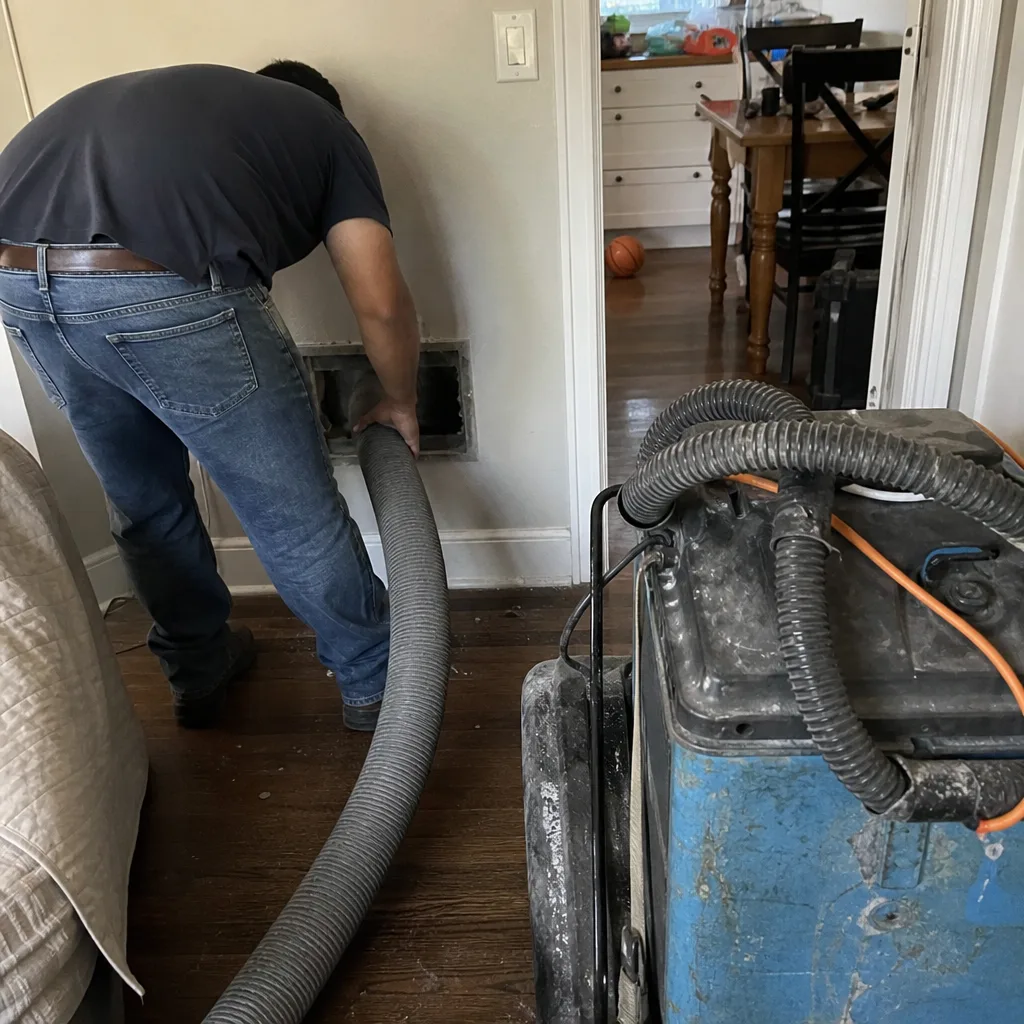
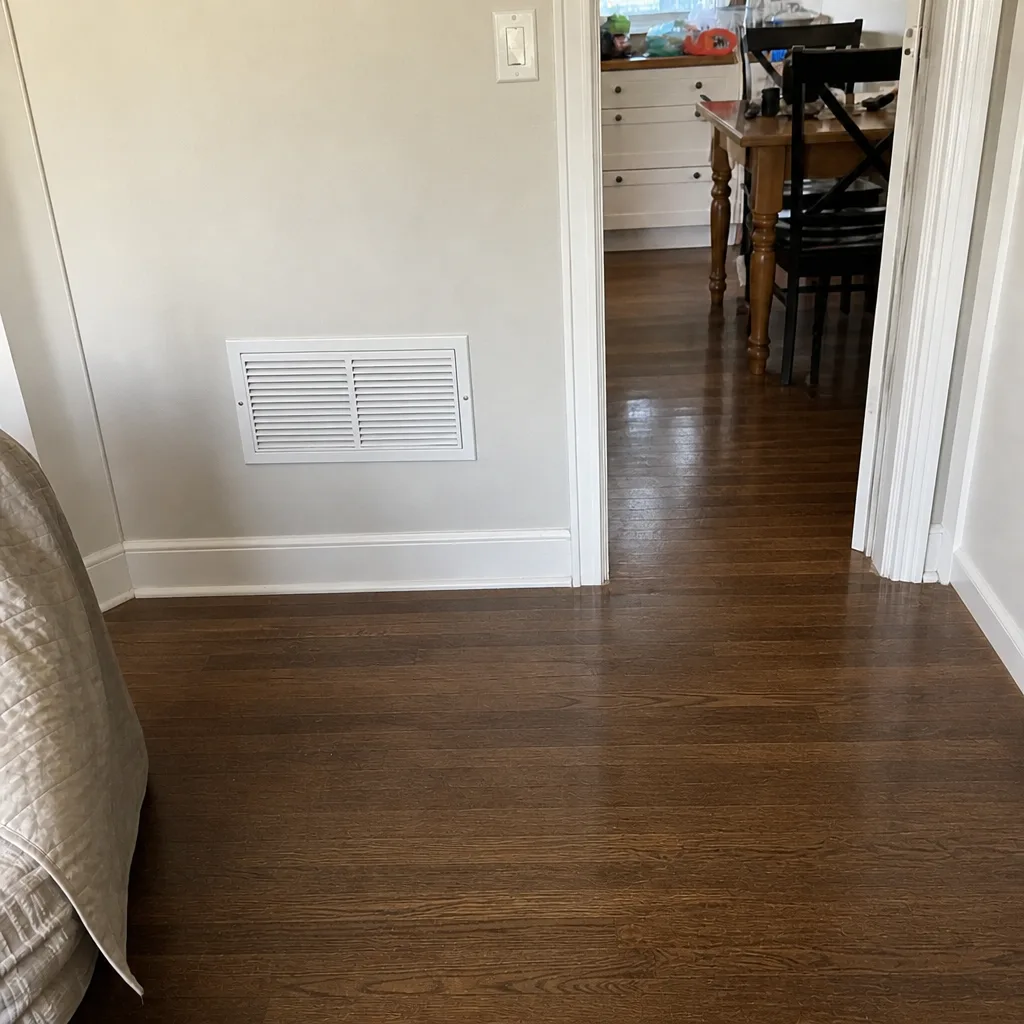
- Documentation. We show before-and-after photos of the ducts.
For homes with existing IAQ systems, we’re authorized to work with Honeywell and Aprilaire equipment. That means if we find a filtration or humidity control component that’s underperforming, we can address it as part of the visit rather than referring it out, and your air quality improves beyond the cleaning itself.
We also service dryer vent cleaning alongside duct work. Dryer vents are a genuinely distinct fire hazard and pure HVAC companies often skip them, so having them in the same visit means one appointment handles all your ventilation concerns.
The Cost Reality of Doing It Yourself vs Hiring
Here’s the honest math on the DIY-vs-pro question, and it’s less about dollars than about what you actually get. We don’t quote per-vent or promotional prices because neither tells you anything real. The only price that matters is a flat price per system agreed before work begins, which is exactly how our estimates work.
What you can count on:
- A written estimate sets the final price. No surprises once the technician is on site.
- The quote covers the whole system, not per vent, not per register, not per room.
- Before-and-after photos of your own ducts, so you can verify the work was done.
The equipment cost of DIY is deceptively high for the results. A shop vac, brush attachment, access tools, and hours of time get you maybe 10% of what a professional system cleaning achieves, and in the worst cases they create a repair that costs more than the original cleaning.
A typical Hampden service call also includes an air quality assessment. If you’ve been dealing with allergy symptoms, we can look at whether your Honeywell or Aprilaire filtration is doing its job, and if not, we’ll tell you what would. You’ll get an answer about your whole system, not just a cleaning receipt.
Our Air Duct Cleaning Hampden team is one call across the five service categories, which means we cover cleaning, dryer vents, HVAC components, duct repair, and air quality in a single conversation. One call covers it.
Common Mistakes to Avoid
- Running a shop vac into a duct branch. It agitates more than it captures and can leave your home dustier than before. Register cleaning is fine, branch cleaning is not.
- Using a consumer brush on flex duct. Flexible duct liner tears more easily than homeowners expect, and a tear is a permanent dust magnet. Never force a brush past resistance in flex duct.
- Cleaning old lined duct without knowing what’s in it. Hampden homes built before 1980 may have duct insulation with asbestos or fiberglass batt lining. A professional assessment comes before any cleaning attempt.
- Assuming “air duct cleaning” on a coupon is the same service. Per-vent pricing and teaser coupons often presage a larger invoice once the technician is on site. Ask whether the quote is flat per system.
- Skipping the dryer vent because the HVAC ducts were cleaned. The dryer vent accumulates lint continuously and is a separate fire risk. It’s not covered by an HVAC duct cleaning.
- Treating mold like ordinary dust. Visible mold inside a duct needs remediation-level containment. Attempting to clean it with a shop vac distributes spores through the room. Leave this to professional equipment.
- Never changing the filter after a cleaning. A fresh filter right after cleaning extends the results dramatically and costs next to nothing. Skip it and the ducts get re-contaminated faster.
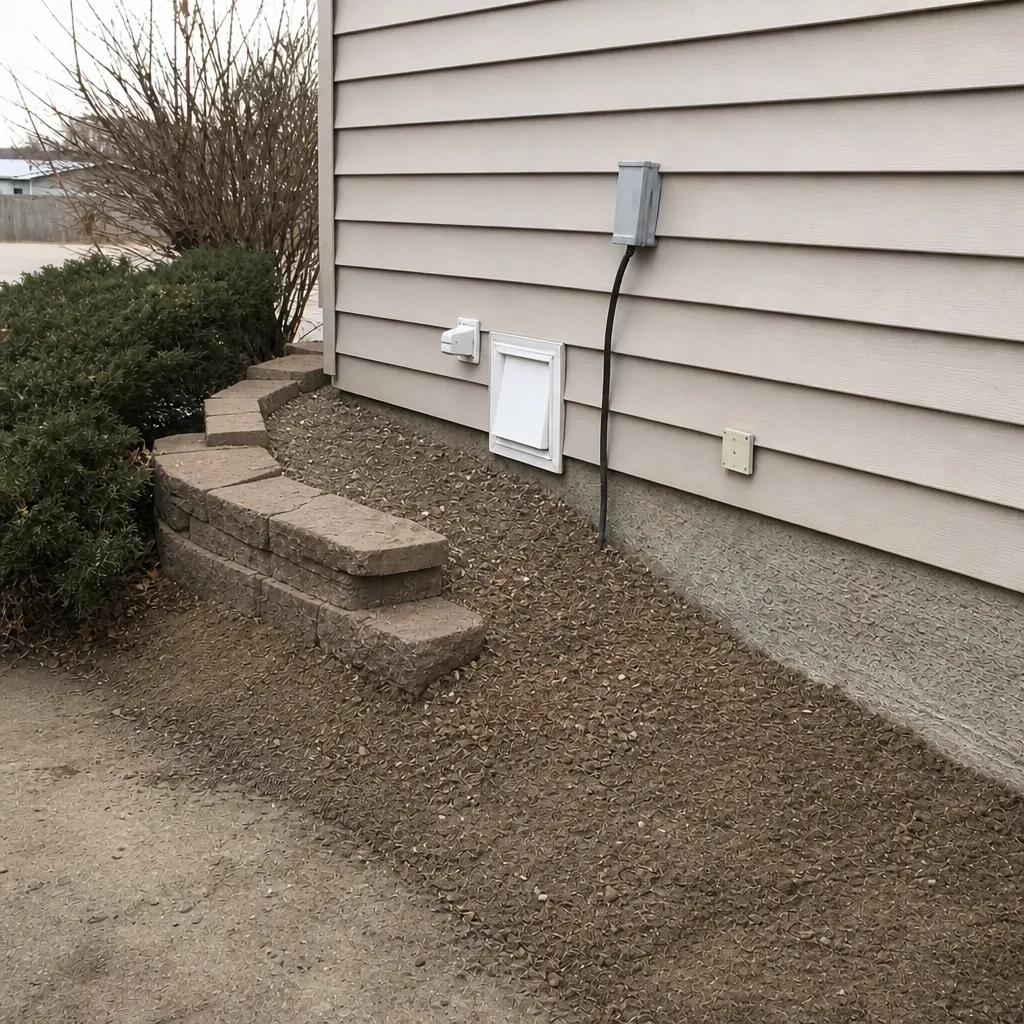
See the difference
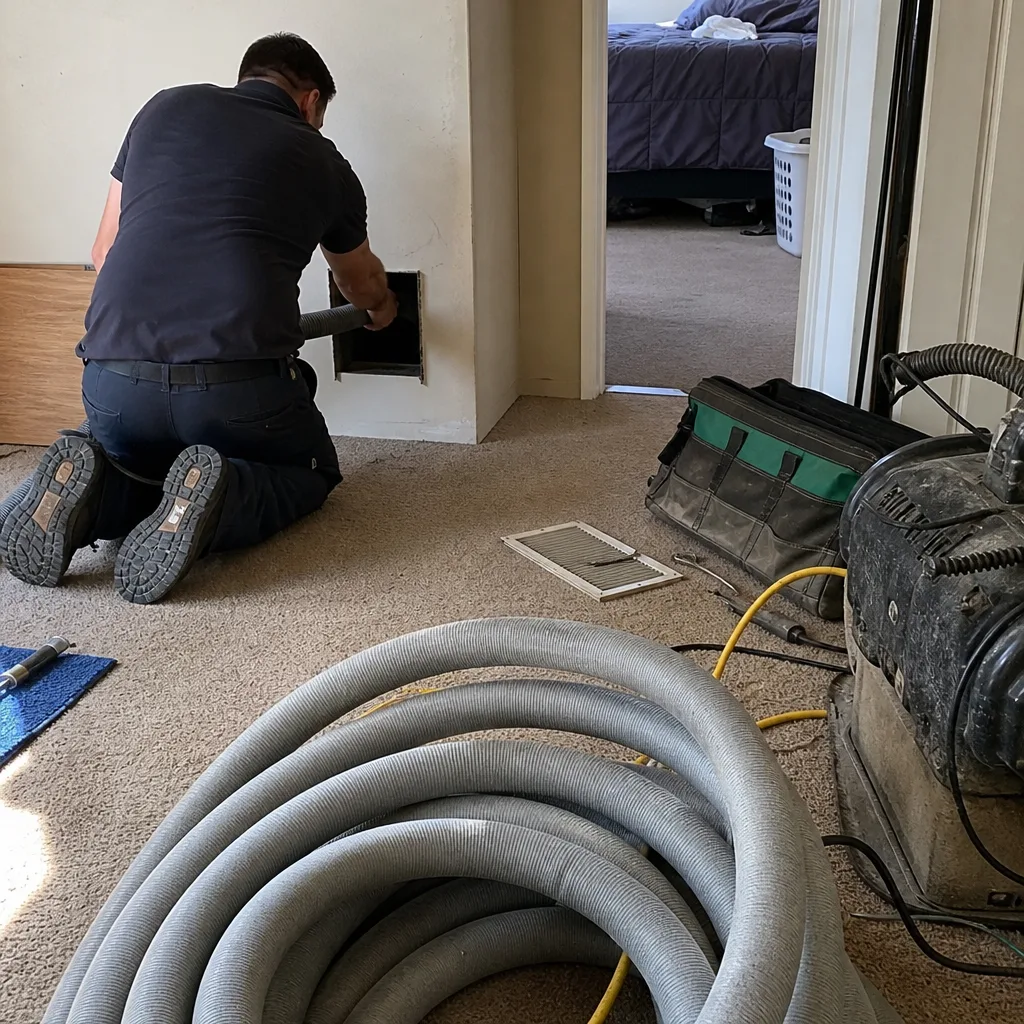 Before
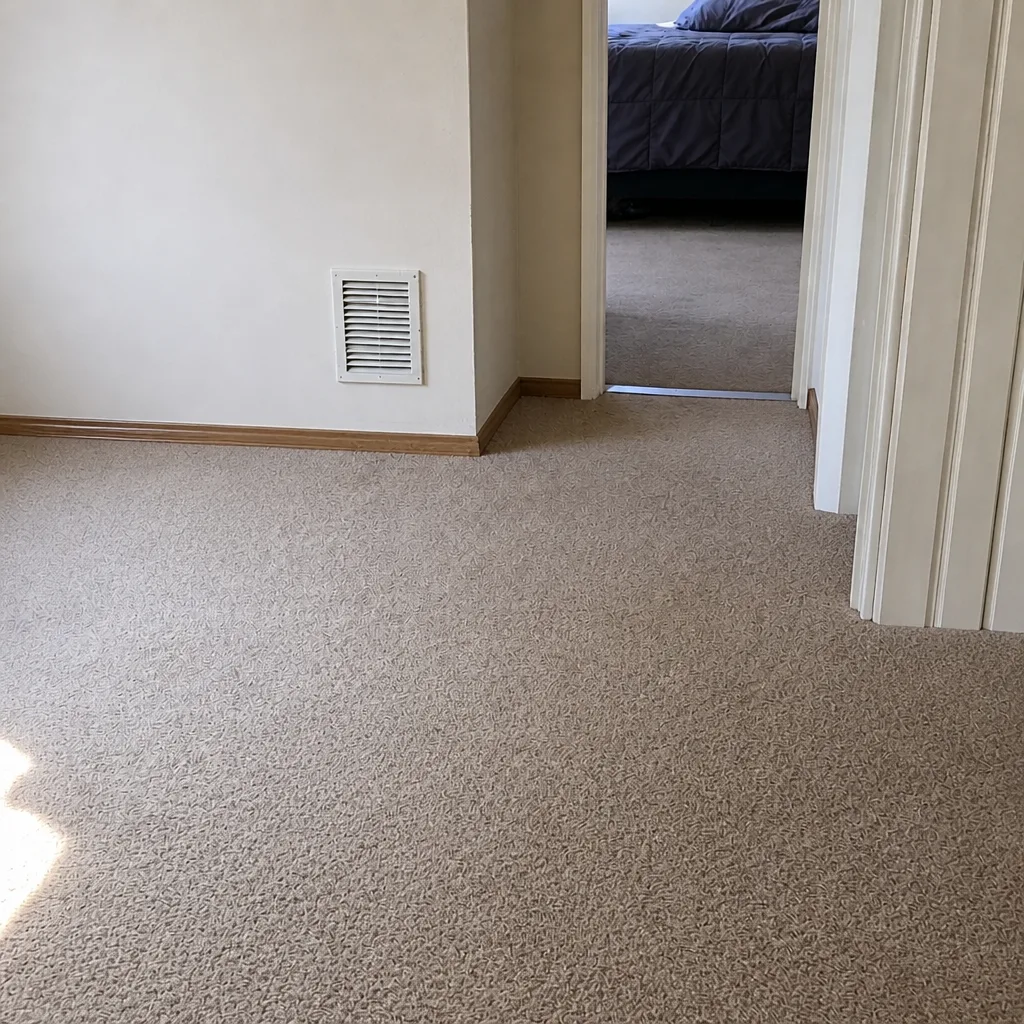 After
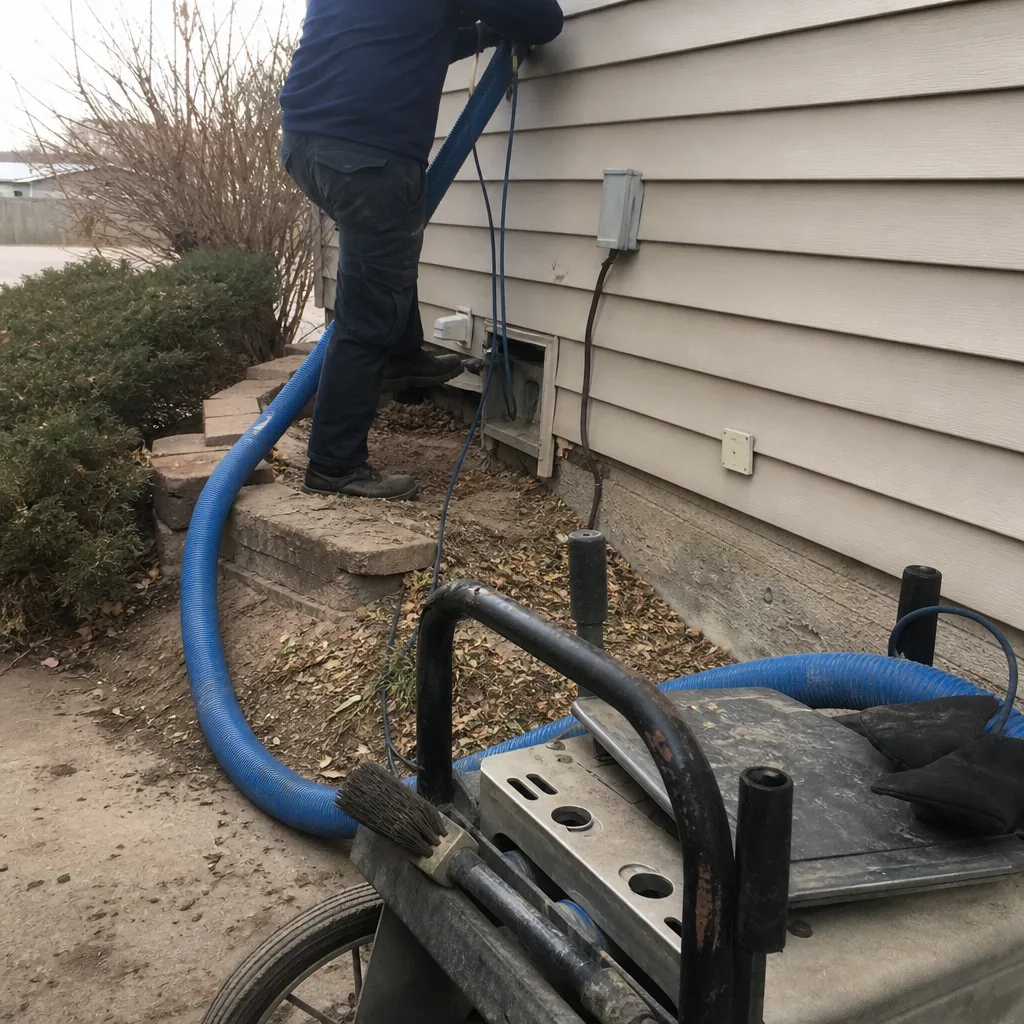 Before
 After
 Before
 After
When to Call a Professional
You should call in a professional when the ductwork itself is the problem rather than just the registers. That means any home built before 1980 with duct insulation of unknown composition, any home with visible mold or musty odors at a register, any recent renovation with drywall or construction debris in the system, any cold room that shouldn’t be cold (a sign of duct leakage), and any HVAC system that hasn’t had a component-level cleaning in years.
Air Duct Cleaning Hampden offers free estimates in Hampden. We work with Rotobrush and Nikro equipment, we carry Abatement Technologies containment for sensitive situations, and we handle repair, sealing, and sanitizing alongside the cleaning so a leak doesn’t undercut the job. Call (855) 658-4374. We answer 24/7. Fast dispatch from 7am to 7pm, Sunday through Friday.
Frequently Asked Questions
Pricing is set per job by a free written estimate, and the estimate covers the whole system rather than pricing per vent. That structure exists specifically because per-vent pricing lets a quote grow once the technician is on site. Call (855) 658-4374 for an exact quote, estimates are free, and the written number is what you pay. We answer 24/7.
Cheap quotes usually skip the containment and mechanical agitation that make the job real. A cheap service may vacuum the accessible register openings with consumer equipment and skip the trunk lines, which means the total contamination load barely changes. Our quotes include full-system vacuum capture, rotary brush agitation, and before-and-after photos so you can verify the work.
Before-and-after photos of your own ducts are the simplest check, and we provide them as part of the visit. Photos taken inside the duct show the actual state of the surfaces on both ends of the visit. If a service won’t document the work, that tells you something. Call (855) 658-4374 to book, and we’ll walk you through the process.
For most Hampden homes, every few years is reasonable, and that interval shortens if you have pets, a recent renovation, or a pre-1980 home with lined ducts. A home with a well-maintained filtration system can stretch the interval. If you’re not sure, a free estimate gives you a real answer about your system, call (855) 658-4374.
You can clean your registers, filter housing, and dryer vent lint zone with hand tools, and that’s genuinely useful maintenance. What no shop vac accomplishes is source removal from inside the duct system, because 60 CFM can’t capture what it disturbs. Attempting it typically redistributes dust into the room rather than removing it.
Yes, primarily around duct insulation. Homes built before 1980 may have insulation containing asbestos or interior fiberglass batt lining, and disturbing either material without HEPA containment turns a routine cleaning into a hazmat situation. Call (855) 658-4374 before touching pre-1980 ductwork, our Abatement Technologies equipment is designed for exactly this category.
The Bottom Line
DIY duct cleaning has a real but narrow role in Hampden homes: registers, filters, filter housings, and the accessible first stretch of dryer vent. Those tasks save money and extend the results of professional cleaning. Everything past the first bend of the duct branch, everything involving flex duct, everything involving mold, construction debris, or pre-1980 insulation, is where consumer equipment stops working. The 250x suction gap isn’t a marketing talking point, it’s the physical reason source removal needs professional gear. Know where your tools stop, do the tasks that make sense, and let a professional handle the rest. Call (855) 658-4374 for a free estimate. We answer 24/7. Fast dispatch from 7am to 7pm, Sunday through Friday.
Written by the team at Air Duct Cleaning Hampden.