
Last updated November 24, 2026
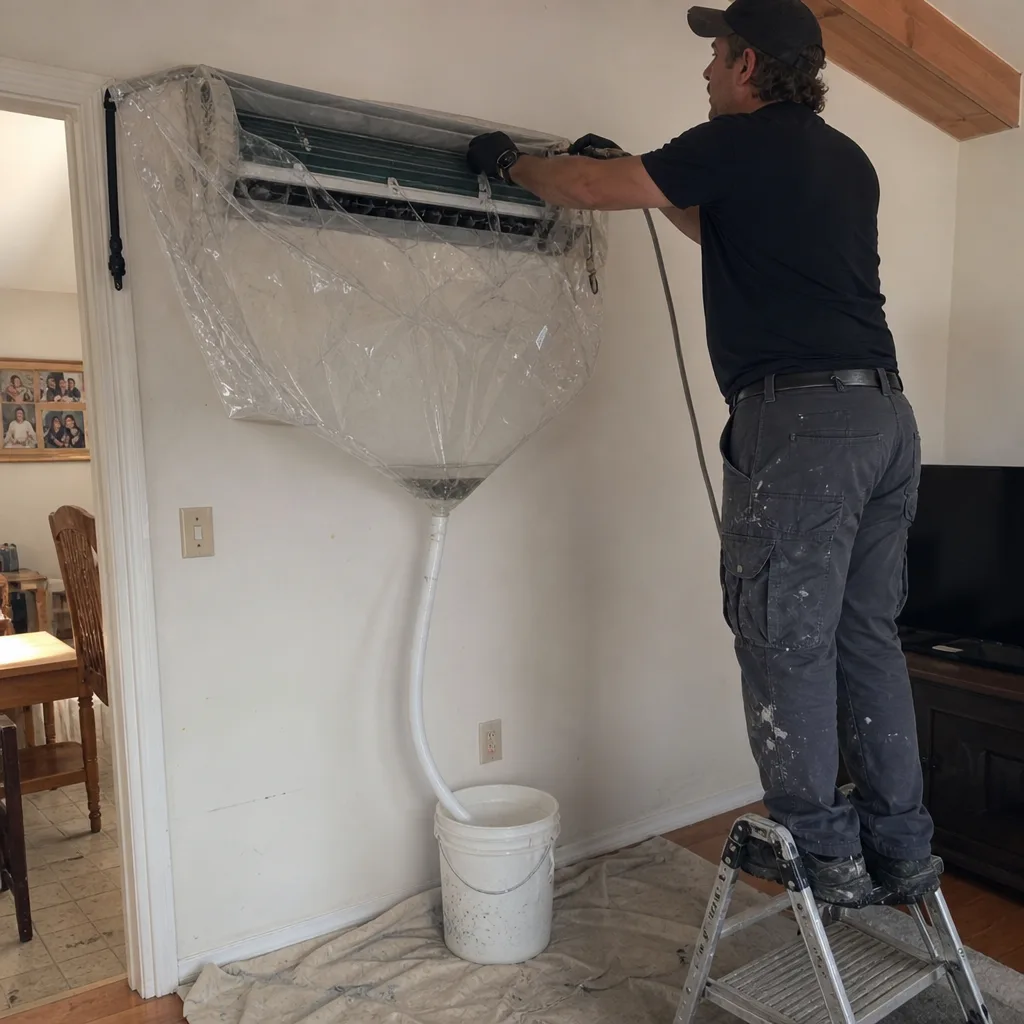
 Whole-home duct cleaning
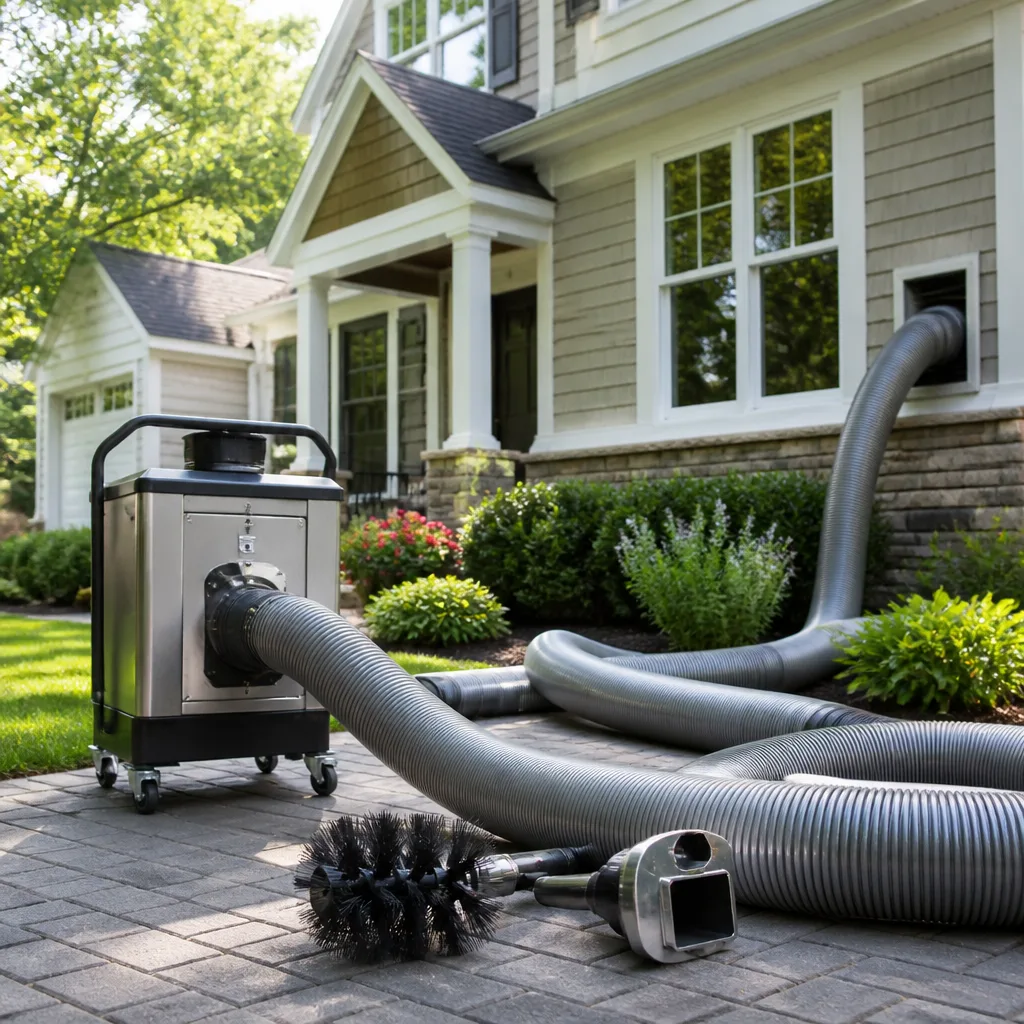
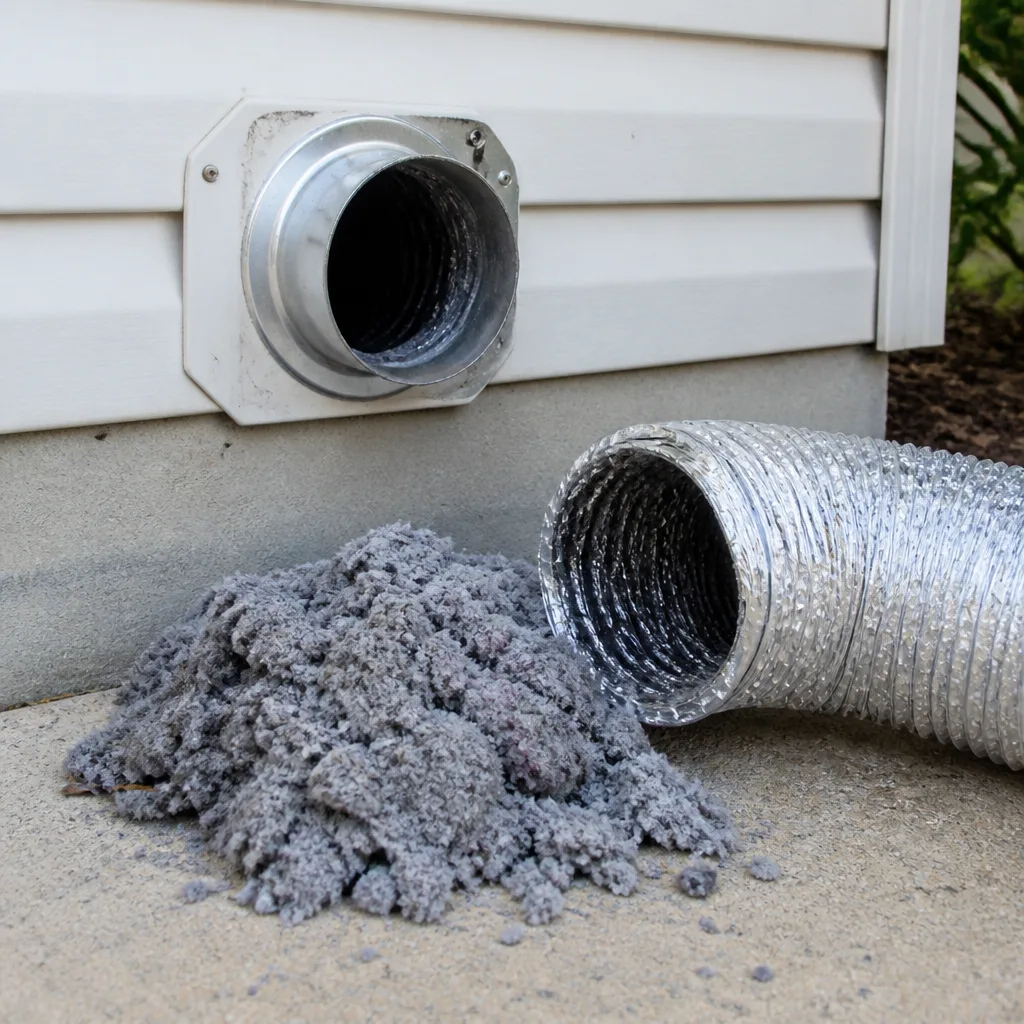 Dryer vent cleaning
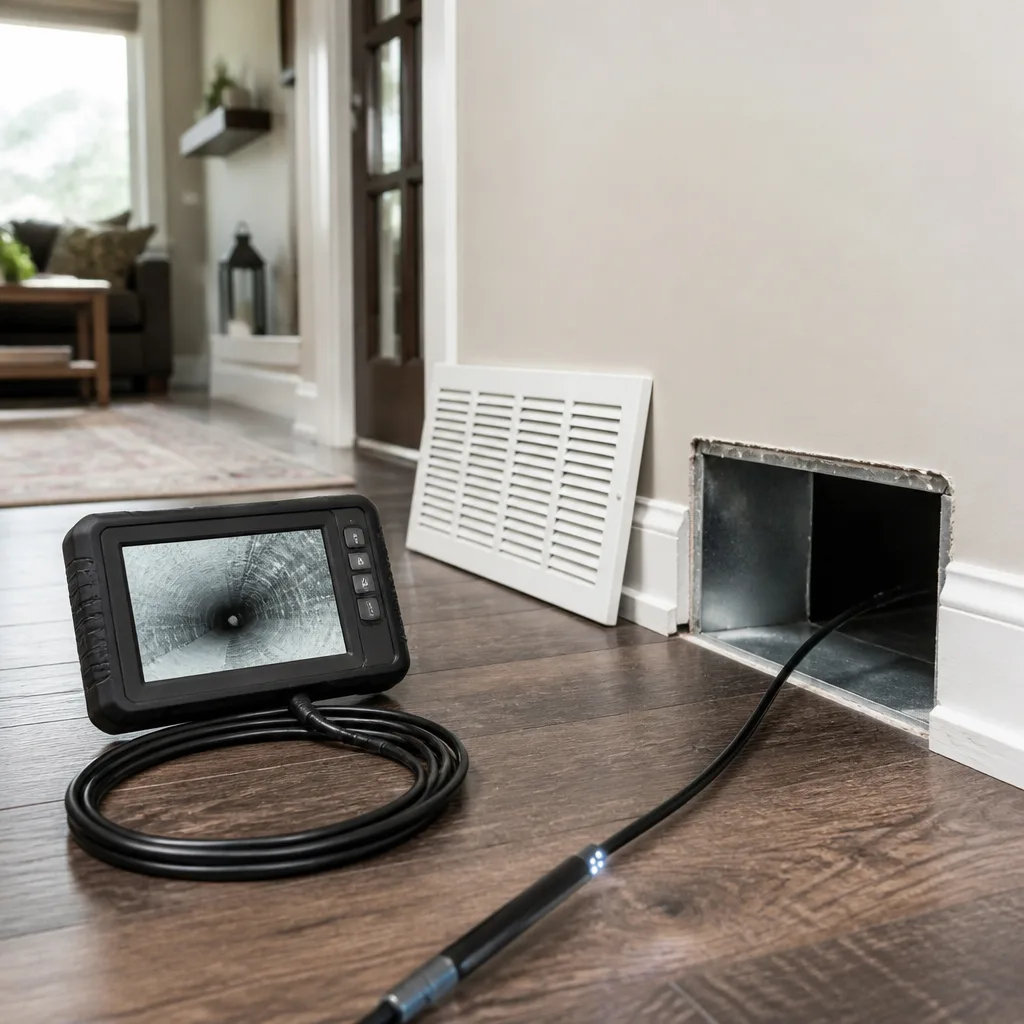 Camera inspection
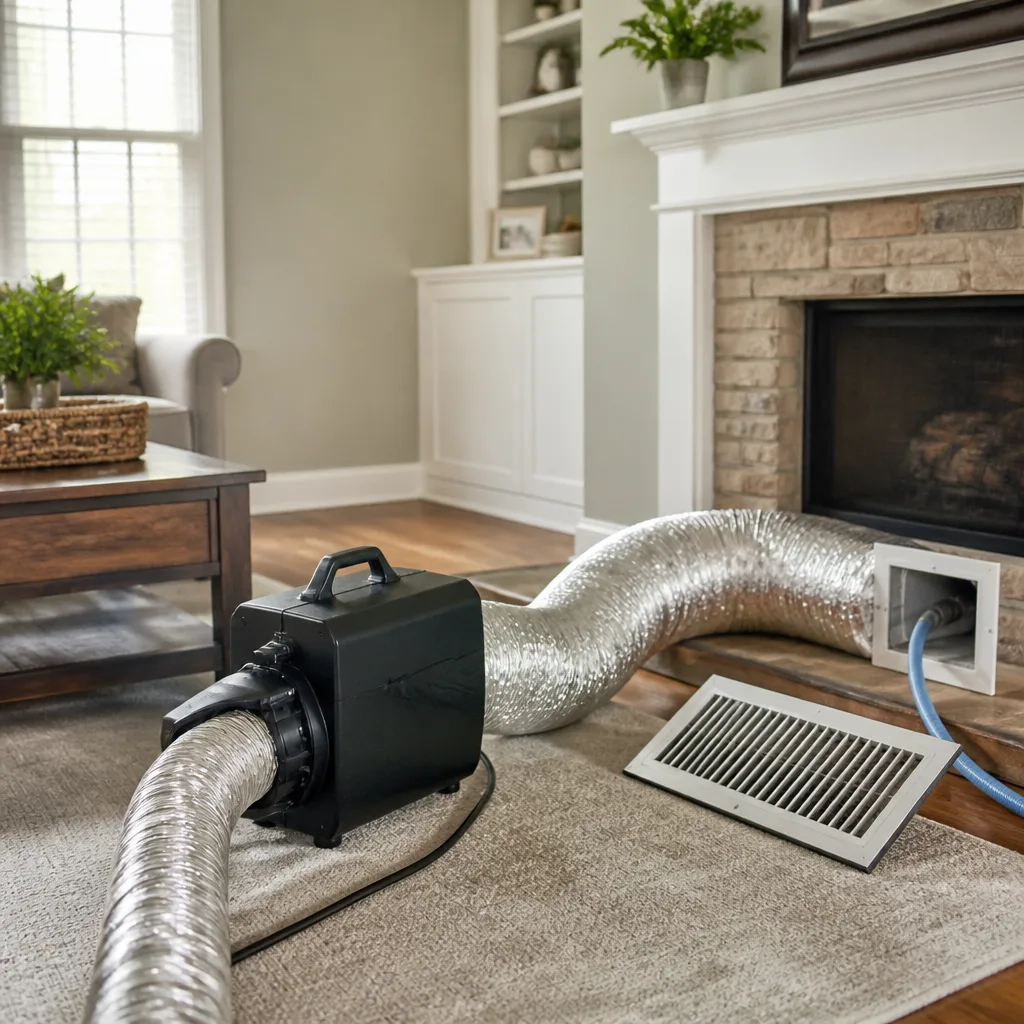 Sanitizing & deodorizing
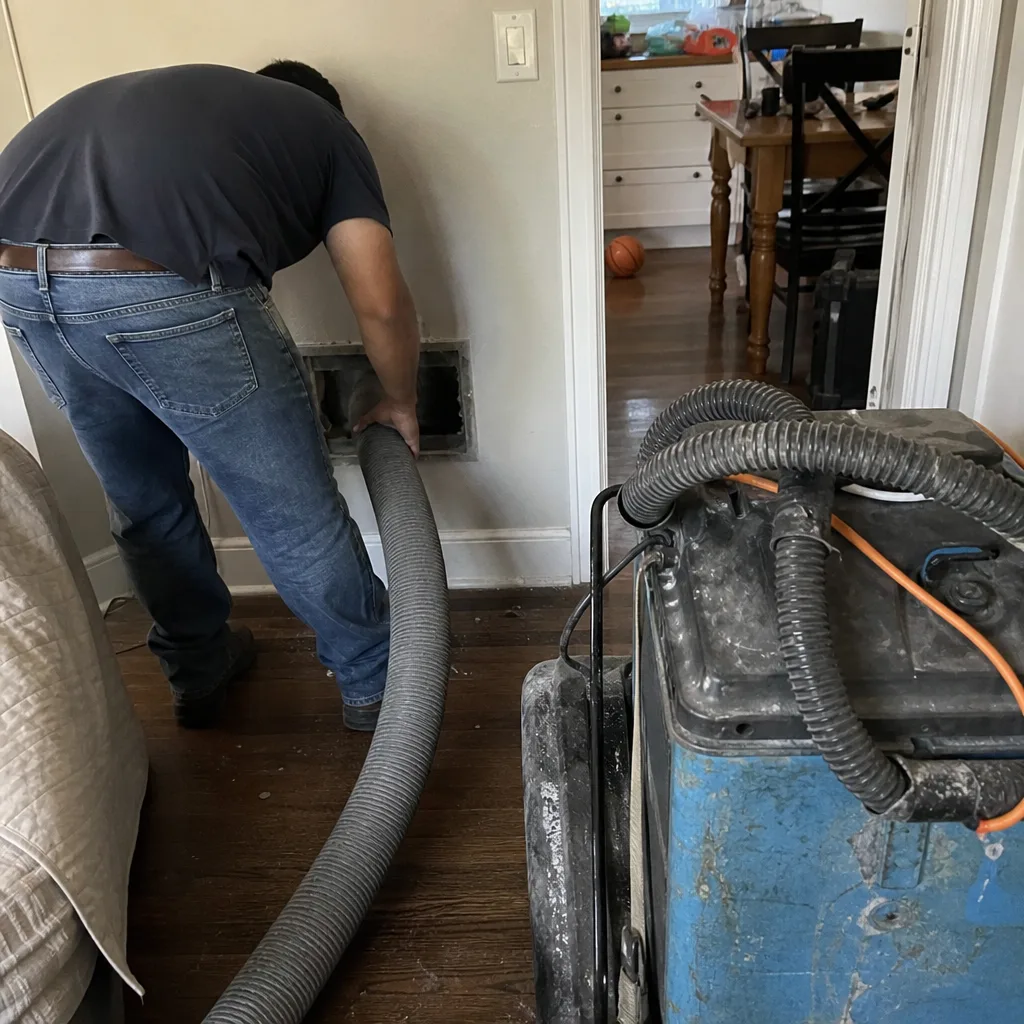
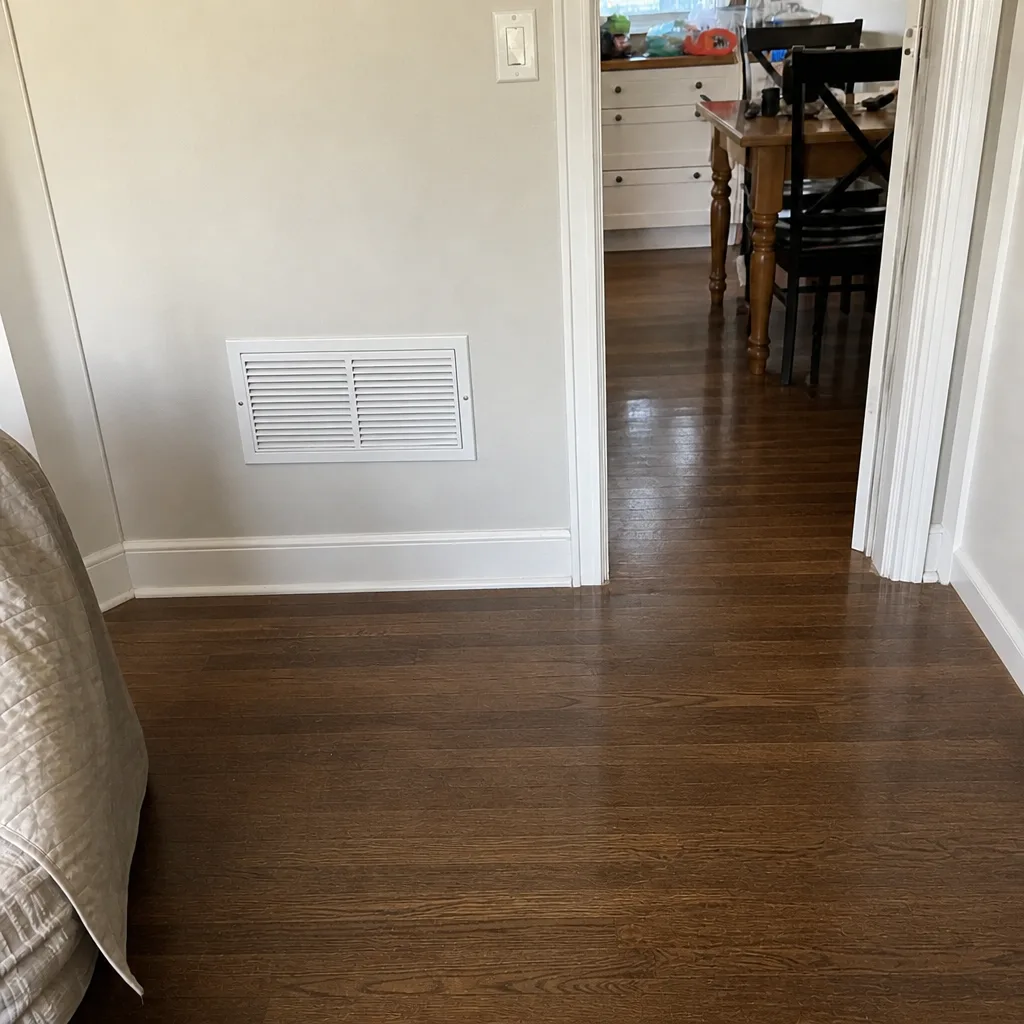
Whole-system duct and dryer vent check with before-and-after photos - you see exactly what came out of your vents
That "$99 whole-house special" is a bait ad - the real number appears once they are in your hallway, or the "clean" is a shop-vac at the register. We photograph the inside of your ducts before and after instead.
Air Duct Cleaning Warning Signs: A Hampden Homeowner’s Reference Guide
Most duct-cleaning advice you’ll find online tells you to look at your supply registers and see whether they’re dusty. That’s the obvious check, and it’s also the least useful one. By the time dust is caking a register, the issue has usually been building for months. The signals that actually matter in Hampden homes are quieter: a smell that shows up only at the start of a heating cycle, a door that drifts shut on its own when the furnace kicks on, a room that never quite reaches the thermostat setting, a winter gas bill that climbed without explanation. These are system-level clues, and most of them point to pressure imbalance, contamination, or duct leakage rather than a filter that needs changing. This guide walks through each signal, tells you what it likely means, and flags the handful that call for shutting the system down before you do anything else.
Quick Answer
The most reliable warning signs of a duct problem in a Hampden home are: a musty or chemical smell that appears within the first 15 minutes of furnace runtime, doors that move or rooms that never reach set temperature, visible growth or mineral deposits at the registers, allergy symptoms that worsen only inside your house, and HVAC runtime that climbs more than 15% year over year. Smells of refrigerant, gas, or hot metal mean shut the system off and call for service immediately. Dusty registers alone are a weak indicator; pressure, odor, and performance data are the strong ones.
Styles & brands we work with
- Whole-home duct cleaning
- Dryer vent cleaning
- Camera inspection
- Sanitizing & deodorizing
Table of Contents
- The Odor Test: What Your Ducts Are Telling You
- Pressure Imbalance: The Signs Most Homeowners Miss
- Visual Classification: Mold, Mineral Deposits, and Ordinary Dust
- Allergy Symptoms That Only Show Up at Home
- Runtime Creep: Reading Your HVAC System’s Performance Data
- Post-Renovation and Seasonal Signals in Hampden
- Common Mistakes to Avoid
- When to Call a Professional
- Frequently Asked Questions
The Odor Test: What Your Ducts Are Telling You
A musty smell that shows up in the first 15 minutes of furnace runtime and then fades is not a filter problem. It’s a strong indication of microbial activity somewhere in the system, most often on the heat exchanger surface or along the main trunk line where condensation collects and never fully dries. Upgrading to a higher-MERV filter won’t touch it, because the filter sits downstream of the source. What you’re smelling is the system heating up, drying out whatever has been growing on those surfaces, and pushing that air through the house for the first time since the last cycle.
Not every smell points to the same cause, and the distinction matters for how urgently you act. Here’s how to classify what you’re noticing:
- Musty, earthy, or like damp basement air, appearing at the start of a heating cycle. Likely microbial growth on interior duct surfaces or the heat exchanger. Not an emergency, but worth a professional inspection, because it tends to worsen until the underlying moisture source is addressed.
- Sweet, chemical, or faintly like new-car solvent. This is consistent with refrigerant from a leaking coil. Refrigerant isn’t something you should be breathing. Shut the system off and call for service.
- Rotten eggs, or a smell like a gas stove that hasn’t lit. Treat this as a possible gas leak. Leave the house and call your gas utility before doing anything else. Do not run the system to “check” whether the smell clears.
- Hot metal, burning dust, or a scorched smell. Often a cracked heat exchanger or a failing blower component. Turn the system off at the thermostat and have it inspected. A cracked heat exchanger can allow combustion gases into the supply air, and that is a genuine health concern, not a comfort issue.
- Sharp, acrid, or like burning plastic. Could be wiring, a failed capacitor, or debris against a hot surface. Shut it off and call.
If you can’t place the smell, shut the system down and pay for an inspection rather than guessing. In Hampden, where heating season runs long and systems cycle heavily, a smell that appears only at the start of runtime is easy to dismiss as “just how the house smells in winter.” It usually isn’t.
Pressure Imbalance: The Signs Most Homeowners Miss
Your duct system is a pressure vessel. When it’s sealed and sized correctly, the supply and return sides stay roughly balanced and air moves through the house the way the design intended. When it isn’t, you get symptoms that look like unrelated household quirks. A door that swings shut on its own when the furnace comes on. A bedroom door that’s hard to close. Draughts along the baseboard in a room with no exterior wall. These are pressure signals, and they’re more informative than most of what you’ll read on a duct-cleaning checklist.
Here’s what each one tends to mean:
- A door that moves or swings when the HVAC starts. The room is being pressurized or depressurized relative to the rest of the house. Usually that means the return path is undersized or blocked, so supply air has nowhere to go and pushes against the door.
- A room that never reaches the set temperature, no matter how long the system runs. Often a supply run that’s too small, disconnected, or leaking most of its air into a wall cavity before it reaches the room. No amount of thermostat adjustment fixes this.
- Whistling or whooshing at a register. A sign of a restriction close to the register, or a system moving more air than the ductwork can handle. Common after a system upgrade where the ducts weren’t resized.
- Dust staining along seams and joints in the ductwork. Pressurized air finding its way through a gap. If you can see the stain, air is leaking there.
- Hot or cold spots that don’t correspond to the layout of the house. Air is being delivered unevenly, which usually traces back to leakage or an out-of-balance system rather than to the furnace itself.
What these symptoms share is that they’re caused by the same underlying problem: the ductwork isn’t sealed and it isn’t sized correctly for the system it’s attached to. Cleaning alone won’t fix it. Sealing the leaks and addressing disconnected runs will. That’s why we treat cleaning and duct repair as one job rather than two: brushing a system that still leaks means the air you just cleaned gets contaminated again within a season. Hampden’s older housing stock has plenty of ductwork installed before anyone thought carefully about pressure, so these signals show up regularly.
Visual Classification: Mold, Mineral Deposits, and Ordinary Dust
Dust at a register is the most overdiagnosed warning sign in this trade. A thin uniform layer of light gray dust is normal for any home, especially in a dry climate where dust moves constantly. It tells you the filter is doing its job and that a small amount of fine particulate is making it through, which is expected. What actually matters is what kind of deposit you’re seeing. Pull a register cover off and look at the inside of the boot and the first stretch of duct. Three distinct categories are worth knowing.
- Ordinary gray dust. Uniform, dry, easy to wipe away, no smell. Routine. This is what a filter is designed to leave behind in small amounts, and it doesn’t by itself justify a cleaning.
- White, chalky, or crusty deposits. These are mineral. They tend to form where condensation has repeatedly wet and dried on a metal surface, often near cooling coils or on the first run off the plenum. They point to a moisture problem more than a cleanliness problem, and the moisture needs to be found first. Cleaning the minerals without fixing the moisture just resets the clock.
- Dark, fuzzy, or speckled growth, often with a musty smell. This is consistent with microbial growth, and it’s the category that needs a proper look. It usually sits where condensation collects or where a leaky duct has been drawing humid air from a wall cavity or crawlspace. It also needs the underlying water source addressed, not just a surface treatment.
One more visual: fine black soot or dark smudging near a register, especially one downstream of a furnace. That’s a combustion signal, not a cleaning signal. Shut the system down and have the heat exchanger inspected before running it again. In Hampden, where the heating season is long and the furnace runs hard, this is worth checking at the start of every winter.
If you find yourself in category two or three, the sequence matters: locate the moisture, fix the source, then treat the system. A professional assessment using HEPA-level filtration equipment is the right starting point. Abatement Technologies gear, for instance, is built for containment and filtration during work on contaminated systems, which is why we use it on jobs where mold is a concern rather than a consumer-grade blower that would just redistribute the problem.
Allergy Symptoms That Only Show Up at Home
The most useful allergy signal isn’t the symptom itself, it’s the pattern. If you or someone in the house has symptoms that are worse inside your home than outside it, and worse at home than at work or at school, that’s a diagnostic clue worth taking seriously. Seasonal allergies follow the pollen calendar. Symptoms that track with the house follow something in the house.
What “track with the house” looks like in practice:
- Symptoms that improve noticeably when you’re away for a few days and return within a day or two of coming back.
- Symptoms that get worse specifically when the HVAC is running, especially in the first part of a cycle.
- Symptoms concentrated in one or two rooms, particularly bedrooms or rooms closest to the air handler.
- Symptoms that appeared or worsened after a renovation, a roof repair, or a period of high humidity.
- A pattern that started after you moved into the house and hasn’t let up since.
None of this diagnoses an allergy, and we’re not the right people to do that. But it does point a finger at the air you’re breathing indoors, and it’s a reasonable trigger for a duct inspection. Dust mites, mold spores, and fine renovation particulate all collect in ductwork and get stirred up every time the system cycles. In our experience the houses with the strongest “only at home” pattern are the ones with both an accumulation problem and a leakage problem: contamination sits in the ducts, and leaks pull more in from the crawlspace or wall cavities every time the blower runs.
For sensitive households, sanitizing after cleaning makes a real difference, and pairing that with a recognized IAQ product from Honeywell or Aprilaire addresses the ongoing load rather than just the current one. Cleaning is the reset. Filtration and humidity control are what keeps the reset holding.
Runtime Creep: Reading Your HVAC System’s Performance Data
You don’t need instrumentation to spot a duct restriction. You need your utility statements and a little attention. If your furnace or air conditioner is running noticeably longer to hold the same indoor temperature as it did the year before, something has changed, and duct restriction from accumulated debris is one of the most common culprits. The system is being asked to move the same amount of air through a smaller effective pathway, so it runs longer to do the same job.
A useful threshold: if your runtime has increased by more than 15% year over year at the same thermostat settings and in comparable weather, that’s worth investigating. You can estimate this without any special equipment:
- Pick a stable stretch of weather. Roughly the same outdoor temperatures as last year, similar occupancy, similar thermostat schedule.
- Compare billed usage, not billed cost. Usage in therms or kilowatt-hours reflects the system’s actual work. Cost reflects rate changes and tells you nothing about the ducts.
- Look at the same month year over year. Seasonal swings are large, so comparing January to January is the only comparison that means anything.
- Note whether you’ve made other changes. A new thermostat, a new appliance, a new baby, or a work-from-home schedule all change runtime. Rule those out first.
- Check the filter before you conclude anything. A clogged filter will mimic a duct restriction. Replace it and re-measure for a cycle or two before calling.
If runtime is up meaningfully with no other explanation, the next step is an inspection of the duct system for restriction and leakage. In Hampden, where the heating season carries most of the annual runtime, the furnace is usually the system that shows the signal first. Air conditioning runtime is a smaller number, so the same restriction shows up as a comfort problem before it shows up on a bill.
A related signal: shortened cycling. If the system is starting and stopping more frequently than it used to, that’s often a sign of an airflow problem, not a thermostat problem. Neither of these is an emergency, but both are the kind of slow-moving signal that’s much cheaper to address early.
Post-Renovation and Seasonal Signals in Hampden
Renovation dust is its own category. Drywall dust, sawdust, and insulation fibers are fine enough to travel through a filter that’s been doing fine for years, and construction work in a house being served by its own HVAC system pulls that material straight into the return. If you’ve had a kitchen or bathroom remodel, a flooring replacement, or a roof repair in the last year, and you haven’t had the ducts cleaned since, there’s a reasonable chance the system is carrying a load of construction debris that a filter couldn’t stop.
Hampden’s climate adds a seasonal layer that’s worth understanding. The heating season is long and dry, and the cooling season is shorter but brings its own condensation cycle. That combination produces a specific pattern: ducts that dry out thoroughly in winter, then pick up moisture at the coil and first runs in summer, then dry again. Surfaces that repeatedly wet and dry are exactly where mineral deposits and microbial growth like to form. Spring is when a lot of Hampden homeowners notice the smell signal, because it’s the first time the system has run warm after a cold, dry winter, and whatever was growing in the ducts gets a chance to volatilize.
The practical takeaway for Hampden homes: the best time to inspect the ductwork is right before the heating season starts, not in the middle of it. Catching a moisture problem in September means it doesn’t become a microbial problem by January. If you’re already in the middle of the season and noticing symptoms, that’s not too late; it just means you’re doing the work in a different order.
Aging HVAC systems are the third piece of this. As a system gets older, its blower performance changes, its coils accumulate deposits, and its ductwork has had more years to loosen at the joints. A 20-year-old system in a Hampden house is almost certainly leaking somewhere. When we clean a system like that, we pair it with sealing so the improvement actually holds. That’s part of the reason we offer HVAC cleaning as a separate service from duct cleaning: the air handler and coil have their own cleaning needs that a duct brush doesn’t reach.
Common Mistakes to Avoid
- Assuming a higher-MERV filter will fix a smell. If the smell appears at the start of furnace runtime, the source is downstream of the filter. Upgrading filtration changes how much particulate gets through, not what’s already growing on the duct surfaces. You’ll spend money, notice nothing, and delay the inspection that would have found the actual problem.
- Judging a company by the price of a coupon. A very low advertised cleaning price is often a door opener, with the real scope negotiated once the technician is on site. What you want instead is a single flat price per system, agreed before work starts, with before-and-after photos of your own ducts. Anything else tells you more about the sales call than about the ducts.
- Cleaning without sealing. If the ducts leak, they’ll pull the same contaminants back in within a season. In Hampden’s older housing stock, this is the most common reason a cleaning “doesn’t last.” Cleaning and sealing belong in the same scope.
- Running the system through a renovation without protecting the return. Drywall dust and sawdust travel further than most homeowners expect. If you’re renovating, cover the returns or shut the system down during the dustiest phases, and plan a cleaning afterward if the work was substantial.
- Using a shop vac or a consumer blower to “clean” a duct. These tools don’t contain what they dislodge, they just move it. Fine particulate that gets stirred up without HEPA filtration at the collection point ends up on your furniture, in your lungs, and back in the system. That’s why we run professional equipment like a Rotobrush rotary brush with a Nikro HEPA rig attached, not a leaf blower with a marketing budget.
- Ignoring the dryer vent because the ducts got cleaned. The dryer vent is a separate system and a separate fire risk. It’s one of the most common causes of house fires in the country, and pure HVAC companies routinely skip it. If you can’t remember the last time yours was done, that’s the signal.
- Treating a smell as a comfort issue instead of a safety issue. A musty smell is a comfort issue. A sweet chemical smell, a rotten-egg smell, or a hot-metal smell is not. Shut the system down and call for service before running it again.
When to Call a Professional
Some signals are worth a phone call to a professional. A musty smell that appears at the start of every heating cycle, dark or fuzzy growth visible at a register, a room that never reaches temperature, a door that moves on its own during HVAC runtime, a runtime increase of more than 15% year over year with no other explanation, allergy symptoms that worsen only at home, or a renovation in the last year that wasn’t followed by a cleaning. Any of those is enough reason to schedule an assessment.
A few are more urgent: a sweet chemical smell (possible refrigerant), a rotten-egg smell (possible gas), a hot-metal or burnt smell (possible heat exchanger issue), or visible soot at a register. Those call for shutting the system down and calling right away. We’d rather you shut it off and be wrong than leave it running and be right.
Air Duct Cleaning Hampden offers free estimates in Hampden. Call (855) 658-4374. We answer 24/7. Fast dispatch from 7am to 7pm, Sunday through Friday. When we arrive, you’ll get a written estimate before any work starts, a single flat price per system, and before-and-after photos of your own ducts when we’re done.
Frequently Asked Questions
The strongest indicators are pressure and odor signals, not visible dust. If you notice a musty smell at the start of a heating cycle, doors that move when the HVAC runs, rooms that never reach the set temperature, allergy symptoms that worsen only at home, or a runtime increase of more than 15% year over year, those point to a duct issue worth investigating. Dust at the register alone is a weak signal. Call (855) 658-4374 for an exact quote, estimates are free.
No. If the smell appears in the first 15 minutes of furnace runtime and fades, the source is usually downstream of the filter, often on the heat exchanger surface or along the main trunk line. Replacing the filter won’t fix it. It’s worth a professional inspection because the underlying moisture source needs to be identified, not just the symptom treated. Call (855) 658-4374 to book an assessment.
A sweet or chemical smell (possible refrigerant), a rotten-egg smell (possible gas), a hot-metal or burnt smell (possible cracked heat exchanger), or a sharp acrid smell (possible electrical issue) all call for shutting the system down at the thermostat before doing anything else. Leave the house if it smells like gas. Call for service before running the system again. Call (855) 658-4374. We answer 24/7.
That’s a pressure imbalance. The room is being pressurized relative to the rest of the house because its return path is restricted or undersized. It’s a common signal in Hampden’s older housing stock, and it points to duct leakage or design problems rather than cleanliness alone. Cleaning paired with air duct cleaning and sealing is the usual fix. Call (855) 658-4374 for a free estimate.
There’s no universal schedule that fits every house. A well-sealed system with a good filter and no pets may go many years between cleanings. A house with a leaky duct system, a recent renovation, or allergy-sensitive occupants may need it every few years. The right trigger is the signals in this guide, not the calendar. If you’re not sure, an inspection answers the question. Call (855) 658-4374.
Low advertised prices are usually door openers, with the actual scope and price negotiated once the technician is on site. That’s the bait-and-switch model, and it’s the reason this trade has the reputation it does. The alternative is a single flat price per system, agreed in writing before work starts, no per-vent pricing, and before-and-after photos of your own ducts. That’s what we offer. Call (855) 658-4374 for a free estimate.
Ask for before-and-after photos of your own ducts, not stock images. A company running professional equipment like a Rotobrush system with a Nikro HEPA rig will have no trouble showing you the collection point and the duct surfaces before and after. If a company can’t produce that, that’s your answer. Call (855) 658-4374 to schedule a free estimate.
No. A shop vac or consumer blower doesn’t contain what it dislodges. It moves the fine particulate back into your air, your furniture, and the system. Professional cleaning uses sealed equipment with HEPA-level filtration at the collection point so the debris is captured, not redistributed. This matters most if there’s any microbial concern. Call (855) 658-4374 to book a professional cleaning.
The Bottom Line
The warning signs that matter aren’t the obvious ones. Dusty registers are weak evidence. Pressure signals, odor classification, and performance data are strong. If you smell something at the start of every heating cycle, if a door moves when the HVAC runs, if a room never reaches temperature, if growth or mineral deposits are visible at a register, if allergy symptoms track with the house rather than the season, or if your runtime is up more than 15% year over year, those are worth investigating. The handful of smells that mean shut it down are the ones to act on first.
When you’re ready, we handle the full system. Duct cleaning paired with repair and sealing, dryer vent cleaning as its own safety service, and sanitizing with products like Guardsman when the job calls for it. One call covers the ducts, the dryer vent, the HVAC, and the air quality together. For the full picture of what Air Duct Cleaning Hampden offers, start there.
Call (855) 658-4374 for a free estimate. We answer 24/7. Fast dispatch from 7am to 7pm, Sunday through Friday. Our technicians have up to 14 years of experience, and the local pro is licensed and insured as their state requires. Every job gets a written estimate before work starts, one flat price per system, and before-and-after photos of your own ducts when it’s done.
Written by the team at Air Duct Cleaning Hampden.
See the difference
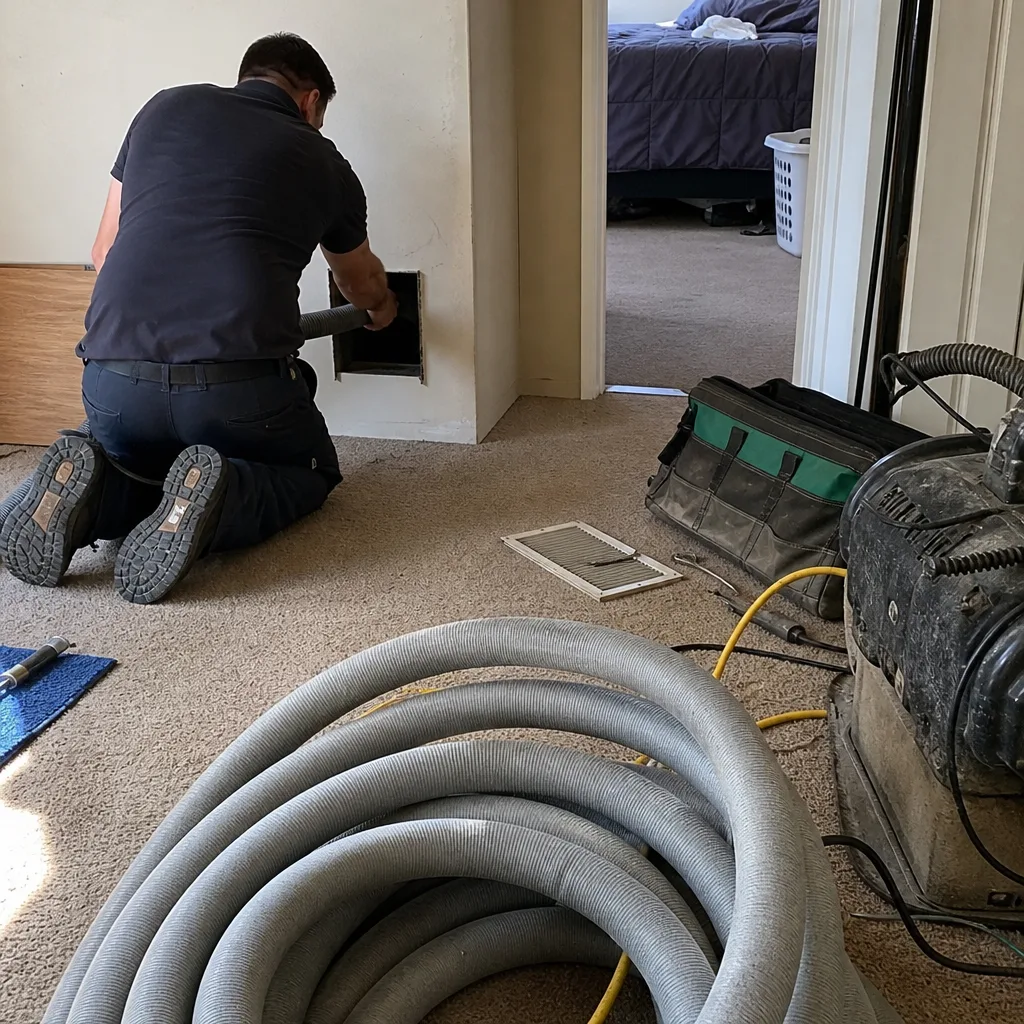 Before
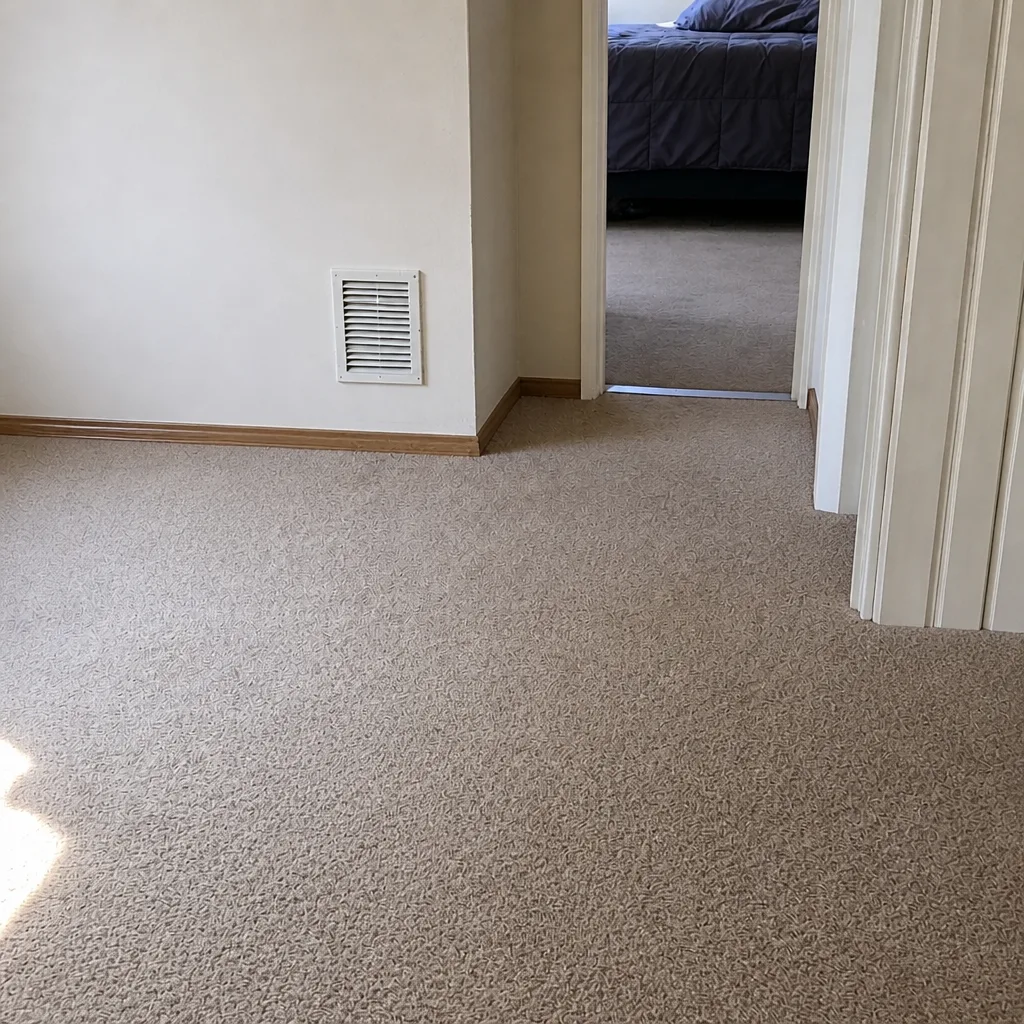 After
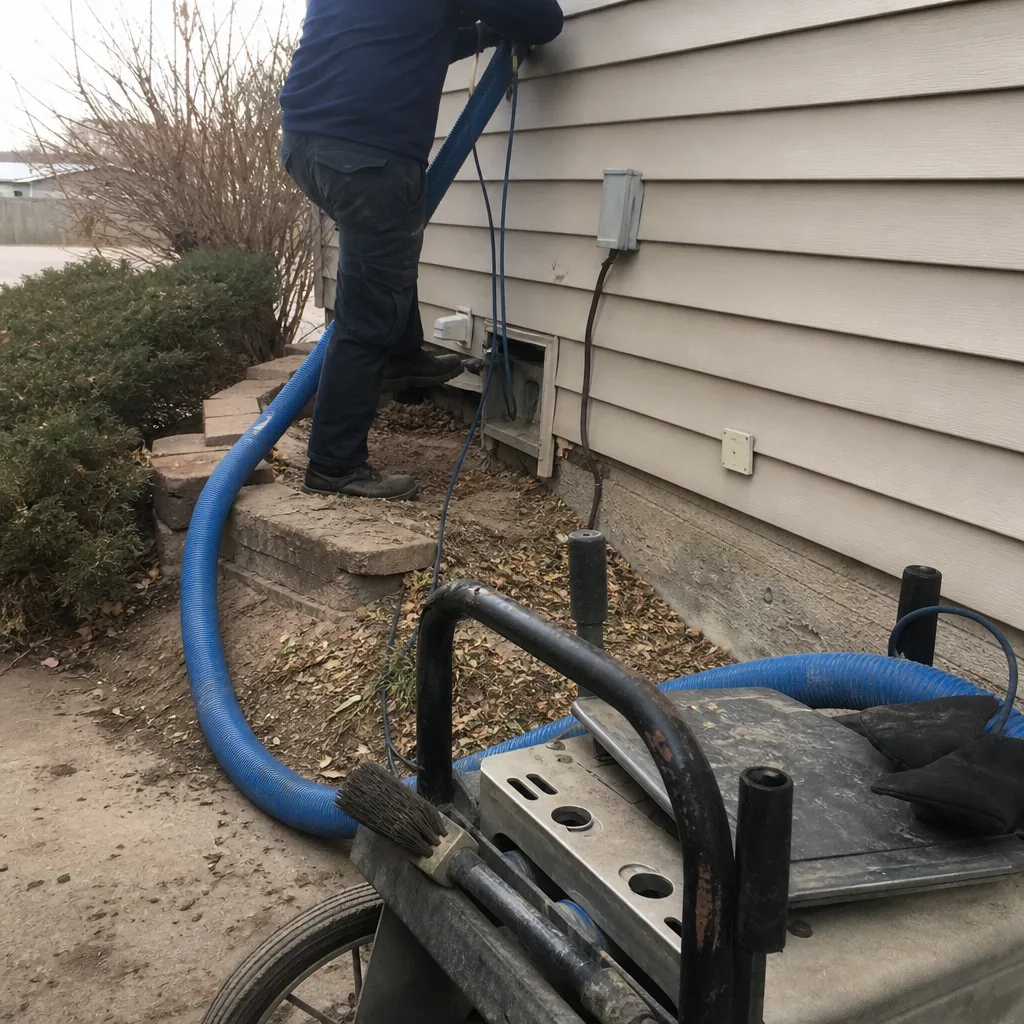 Before
 After
 Before
 After