
Last updated November 24, 2026
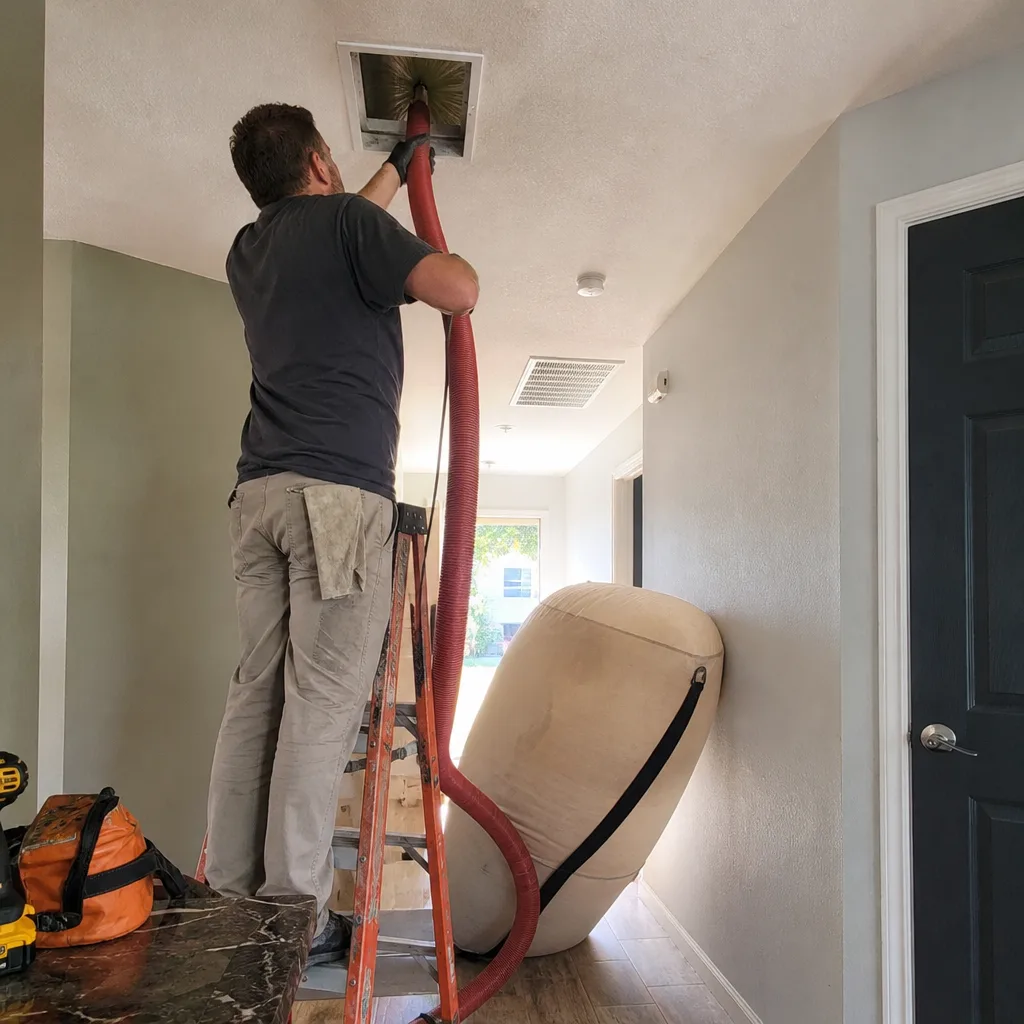
 Whole-home duct cleaning
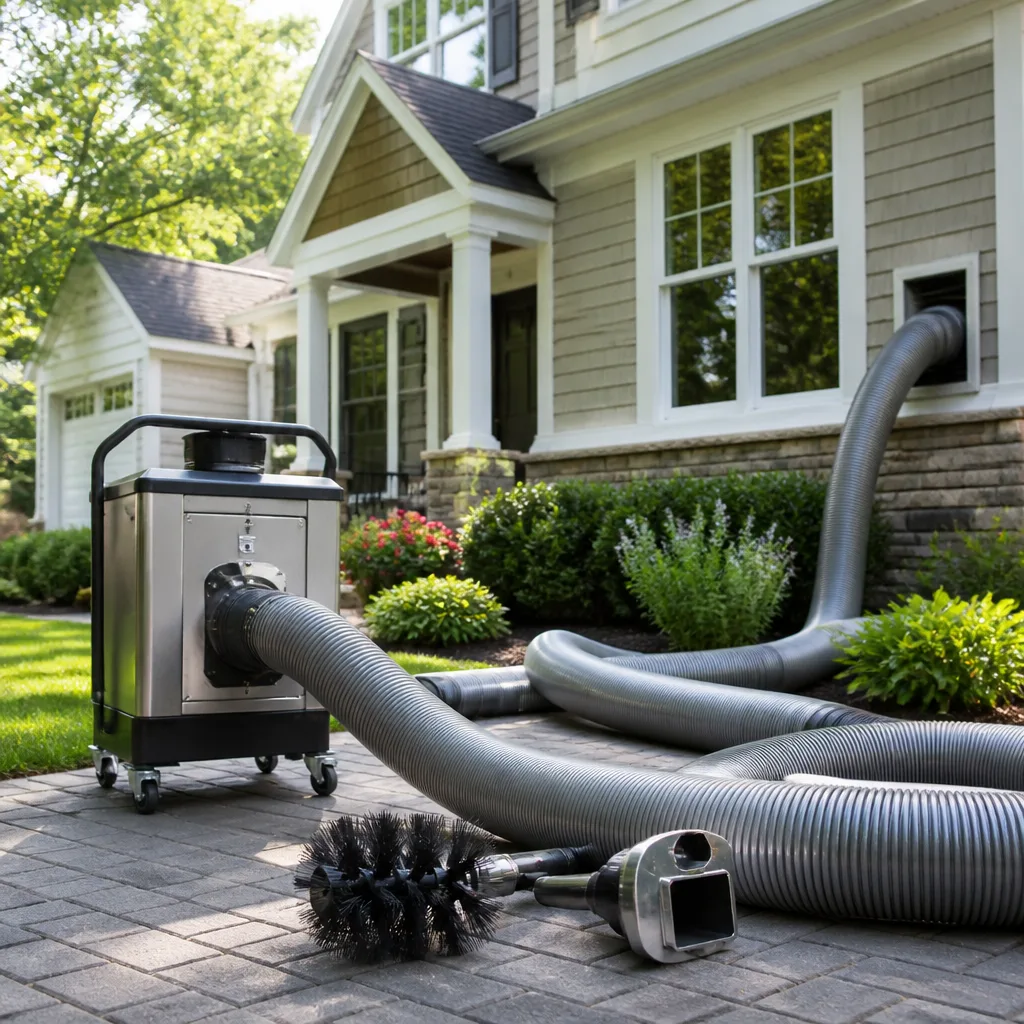
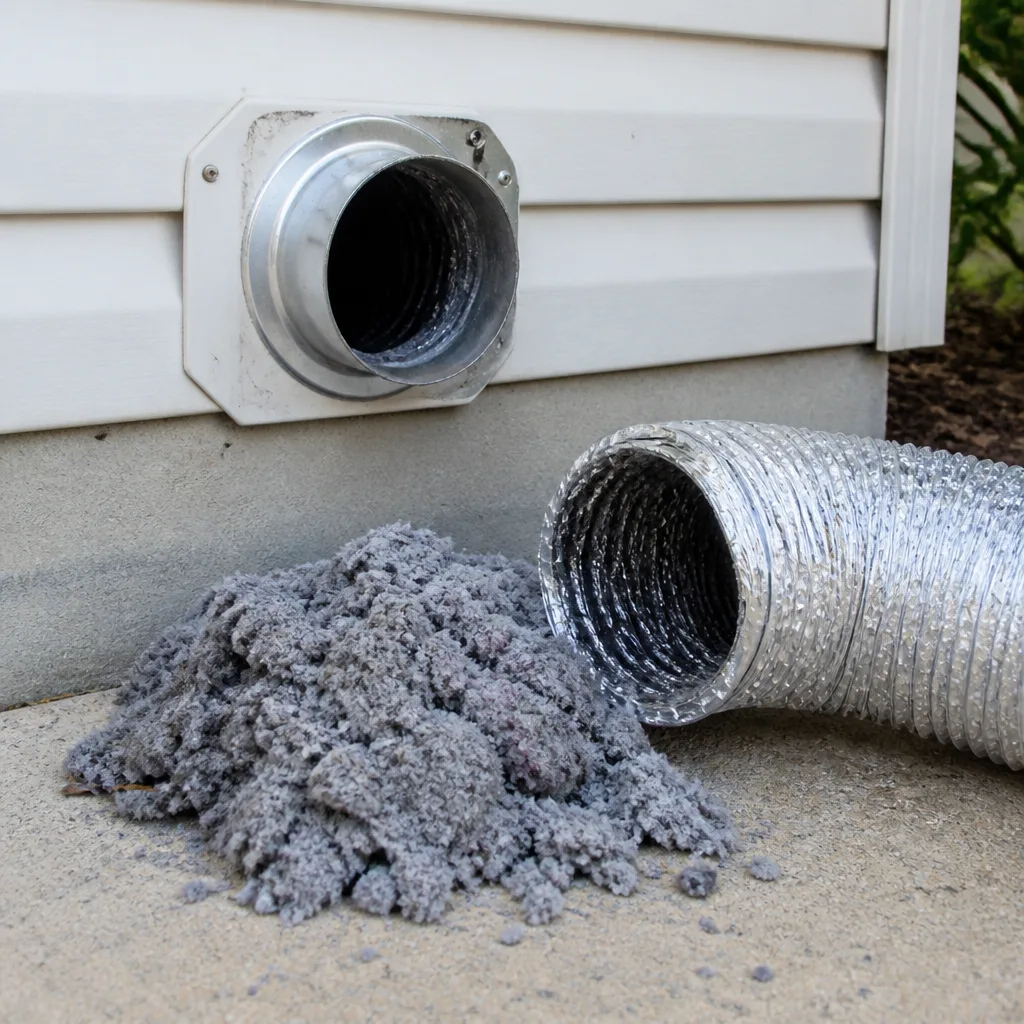 Dryer vent cleaning
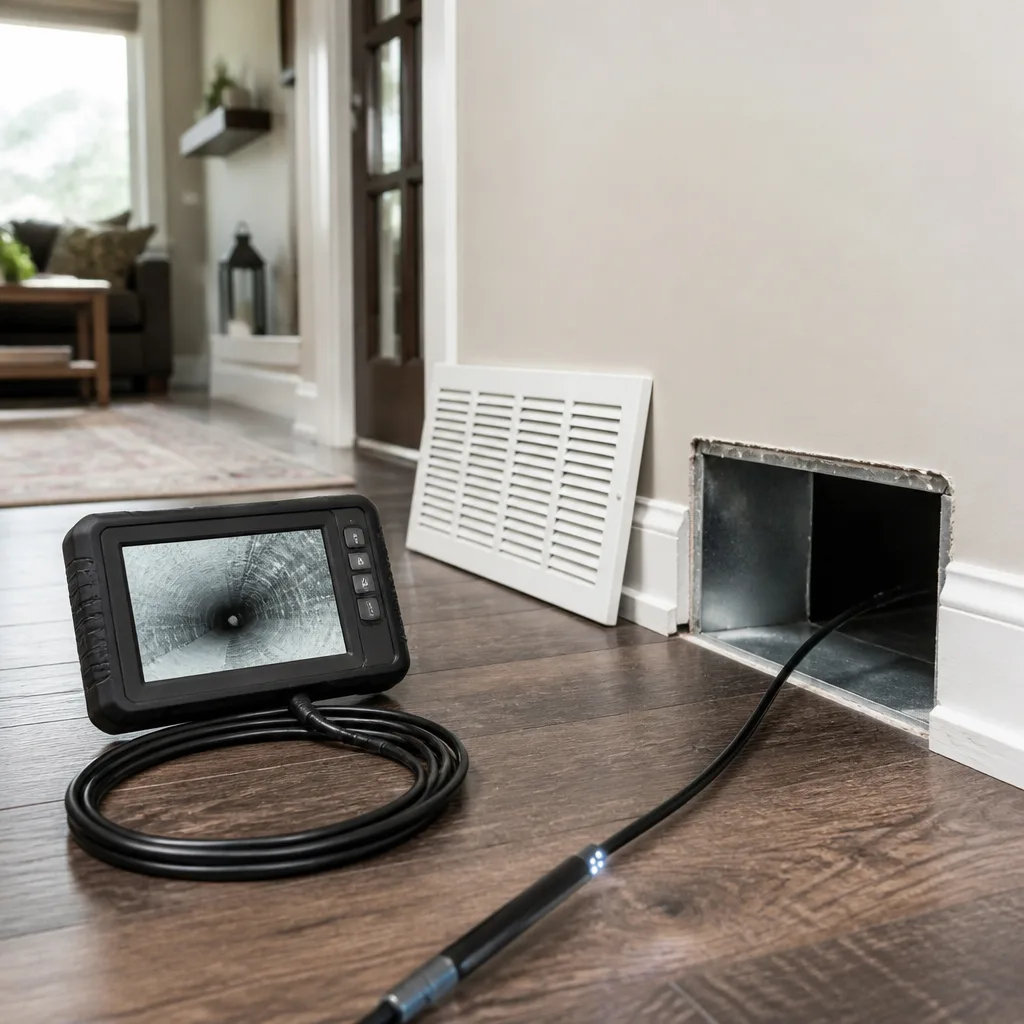 Camera inspection
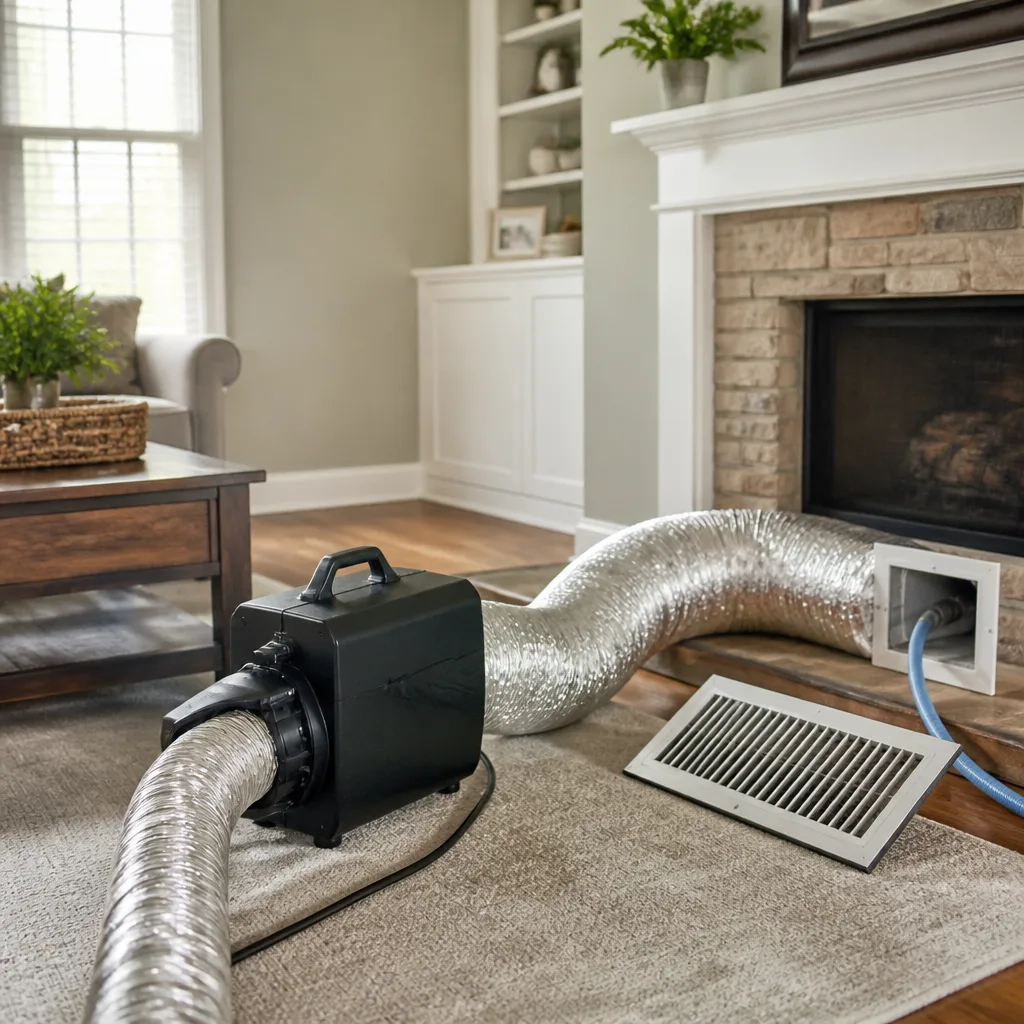 Sanitizing & deodorizing
Whole-system duct and dryer vent check with before-and-after photos - you see exactly what came out of your vents
That "$99 whole-house special" is a bait ad - the real number appears once they are in your hallway, or the "clean" is a shop-vac at the register. We photograph the inside of your ducts before and after instead.
Air Duct Cleaning Troubleshooting in Hampden: Common Problems and How to Fix Them
If a room in your home is consistently 5 to 8 degrees Fahrenheit cooler or warmer than the thermostat setting, that’s not an HVAC mystery. It’s a duct pressure problem with a known fix. Most homeowners treat that kind of symptom as a general “my ducts are dirty” issue and reach for a vacuum, when the real cause is usually a crushed flex run, a disconnected trunk line, or filter bypass letting unfiltered air slip past the cabinet. This guide maps each symptom to its mechanical or contamination root cause so you can walk into a diagnostic conversation informed. We’ll cover the register-paper pressure test, the difference between a cleaning problem and a sealing problem, what to document before anyone arrives, and how the dry Colorado Front Range climate plays into duct performance in Hampden. The goal isn’t to turn you into a duct technician. It’s to help you understand what your system is telling you.
Quick Answer
Most air duct problems in Hampden trace back to one of three root causes: pressure imbalance from crushed or disconnected duct runs, contamination from condensation or filter bypass, or leaks that lose 20 to 30 percent of conditioned air before it reaches the room. Cleaning alone fixes contamination, but a duct that leaks needs repair and sealing before cleaning will hold. A basic register-paper test and a short list of documented symptoms will narrow the diagnosis before a technician arrives.
Styles & brands we work with
- Whole-home duct cleaning
- Dryer vent cleaning
- Camera inspection
- Sanitizing & deodorizing
Table of Contents
- Symptom-to-Cause: What Each Duct Problem Is Telling You
- The Register-Paper Test: Checking Static Pressure Without Equipment
- Cleaning Problem vs. Sealing Problem: Why Cleaning Alone Won’t Fix a Leaking Duct
- When DIY Makes It Worse: How Vacuuming Registers Redistributes Debris
- How Hampden’s Climate and Housing Stock Affect Duct Performance
- What to Document Before You Call a Professional
- What a Professional Duct Assessment Actually Involves
- The Dryer Vent Problem Most Homeowners Misdiagnose
Symptom-to-Cause: What Each Duct Problem Is Telling You
Duct symptoms are like warning lights. Each one points to a specific category of problem, and once you know the pattern you can describe your situation in a way that gets an accurate diagnosis instead of a generic cleaning quote. Here’s the mapping we use when a Hampden homeowner describes what their system is doing.
Uneven airflow between rooms
Chronic hot or cold rooms almost always mean a restriction on one branch of the system. The three most common culprits are crushed flex duct (usually in the attic or crawlspace where installers ran it through a tight chase), a disconnected trunk line where a joint has separated, or a damper that was closed and never reopened after a seasonal adjustment. Flex duct that has been kinked or bent tighter than the manufacturer’s bend radius can lose the majority of its airflow capacity at that one point. If a single room is drastically off while the rest of the house is comfortable, the problem is almost always on that room’s dedicated run, not in the main trunk.
Musty or sour smell when the cooling runs
A smell that appears when the air conditioner cycles on usually originates at the evaporator coil and drain pan, not in the ducts themselves. Moisture collects on the coil, spills into a drain pan that may not be draining fully, and biological growth develops on the damp surface. The blower then pushes air across that growth and into every duct in the house. This is a contamination problem, but the source is the air handler, so HVAC cleaning of the coil and cabinet is often the actual fix rather than the ductwork alone.
Visible dust settling at the registers
Dust building up around a supply register within days of cleaning points to filter bypass. When the return air filter doesn’t seal tightly against its frame, unfiltered air goes around the filter rather than through it, staying loaded with dust that then coats the register and the duct walls downstream. Negative duct pressure on the return side makes this worse by pulling air in through every gap and joint. A properly sized and seated filter in a sealed frame will address a surprising share of chronic dust complaints.
Weak airflow at every register
When the whole house feels starved for air rather than one room being off, the problem is upstream of the branches: a clogged filter, a blower that’s failing, an undersized return, or a main trunk with a significant restriction. This is the pattern where a homeowner often suspects a dirty duct but the actual cause is system design or mechanical failure. It’s worth having a technician look at blower performance and static pressure before assuming the ducts need cleaning.
The Register-Paper Test: Checking Static Pressure Without Equipment
You can get useful information about your duct system’s pressure balance with nothing more than a sheet of printer paper and a couple of minutes. This isn’t a substitute for a technician’s manometer reading, but it tells you whether a room’s supply is moving air and gives you a real observation to report.
- Choose a suspect room at a steady state. Run the system in heating or cooling for 10 to 15 minutes with all doors and windows closed, so the pressure balance reflects the way the house normally runs.
- Hold a single sheet of paper flat across the supply register face. Don’t press it against the grille. Hold it loosely at the edges so the paper has room to move.
- Watch what the paper does. On a healthy supply, the paper gets pushed away from the register and flutters steadily. On a starved supply, the paper hangs slack or barely lifts.
- Repeat at a room you know is comfortable. The comparison matters more than any single reading. A big difference between two rooms on the same system confirms that the problem is branch-specific rather than system-wide.
- Test a return grille the same way. On the return side, the paper should be pulled toward the grille. If it’s barely pulled or the paper falls, the return may be undersized or blocked, which creates the negative pressure that pulls dust into the system through every seam.
- Record what you saw, room by room. Write down which registers moved the paper strongly, which moved it weakly, and which showed almost nothing. That list is worth more to a technician than any description over the phone.
The register-paper test is a rough instrument, and we say that plainly. But it turns “the back bedroom is cold” into “the back bedroom’s supply barely moves a sheet of paper while the master bedroom pulls it flat.” That’s a specific, diagnostic observation, and it points a trained eye toward the branch run, the trunk joint, or the plenum rather than a full-system cleaning.
Cleaning Problem vs. Sealing Problem: Why Cleaning Alone Won’t Fix a Leaking Duct
This is where a lot of money gets spent on the wrong service. Cleaning a duct system addresses contamination: the dust, debris, and biological material that has accumulated on the interior surfaces. Sealing addresses leaks and pressure. Those are different problems, and a duct system can have full-blown contamination and zero leakage, or pristine interior surfaces and significant leakage. Here’s the distinction in practical terms.
- Cleaning problems include dust accumulation, debris from renovation, biological growth at a coil, and the settled material that builds over years in a system with a poorly filtered return. The fix is physical removal under containment, which is why professional gear matters: rotary brush systems and HEPA-rated vacuum rigs contain the debris rather than blowing it back into the room.
- Sealing problems include disconnected joints, gaps at the plenum and cabinet connections, crushed or loose flex runs, and unsealed seams that leak conditioned air into the attic or crawlspace. A duct system can lose 20 to 30 percent of the air moving through it to leaks and never once need cleaning inside.
- The overlap explains a lot of frustration. A duct that leaks pulls in attic air, insulation particles, and dust through the gaps, so a leaky system contaminates faster than a sealed one. In that case, cleaning first and sealing second is the right order, because sealing a dirty system traps debris in the walls. The full-system approach is to clean, then repair and seal, and where needed, sanitize.
In our experience, the cases that don’t hold up over time are the ones where cleaning was done and the leaks were never addressed. The interior gets cleaned, the system keeps pulling attic air through the same gaps, and the ducts are dirty again faster than anyone expects. That’s why what a proper duct service includes should always check the joints and connections, not just run a brush through the trunk.
When DIY Makes It Worse: How Vacuuming Registers Redistributes Debris
Reaching for a shop vac to clean the registers feels productive. It usually isn’t, and sometimes it makes things measurably worse. Here’s what’s actually happening.
- Household vacuums loosen but don’t remove. The suction of a consumer vacuum at the register face pulls at surface dust, but it doesn’t have the airflow or the sealed containment of a duct cleaning rig. Loosened debris that isn’t captured just re-settles downstream.
- The deeper debris stays put and gets redistributed. Every time the blower runs, it pushes air through the loosened material, moving a cloud of dust deeper into the branch and toward the room. That’s how vacuuming a register can leave you with more dust settling on surfaces than before.
- Consumer vacuums blow fine particles back out. A vacuum without HEPA filtration exhausts the finest dust, the particles most likely to trigger allergy symptoms, back into the room it’s cleaning. Professional rigs with HEPA-rated filtration and containment (we use Nikro and Abatement Technologies equipment for this reason) keep that material out of the air.
- Registers are the easy part, not the problem part. The contamination that matters is on the interior duct walls, the coil, and the plenum. You can’t reach that with a vacuum from the vent, and the attempt may disturb material without addressing the source.
Changing filters regularly is genuinely worthwhile, and we encourage it. Where DIY crosses from helpful to counterproductive is when a shop vac, a brush on a stick, or a leaf blower gets run into the ductwork. The materials in older duct systems aren’t built for that kind of treatment, and the disturbance without capture is the setup for a worse dust problem afterward.
How Hampden’s Climate and Housing Stock Affect Duct Performance
The Colorado Front Range has a dry climate with big seasonal swings, cold winters, and a shoulder season where you might run the furnace and the air conditioner within the same week. That pattern shapes the problems we see in Hampden. Dry air reduces the moisture available for mold growth inside ducts, which means that musty smell in a Hampden home is more likely to be sourced at the evaporator coil and drain pan than in the trunk line itself. Summer humidity that comes through during the cooling season still condenses on a cold coil, so the coil remains the location to check when a smell shows up.
Front Range housing stock matters too. Many homes here have duct systems in unconditioned attics or vented crawlspaces, where big temperature swings on the duct exterior create condensation and where poorly sealed joints pull outside air into the system. Flexible duct runs that were stretched through tight chases during construction are common, and a crushed flex run in an attic is one of the most frequent explanations for a chronically cold or warm room in Hampden. Sealing those runs and checking plenum connections is where we see airflow problems resolve rather than just mask. The dry winter air also means homeowners run humidifiers, run furnaces harder, and generate more fine dust from forced-air heating, which loads the return system faster than in a more humid climate.
None of this changes the fundamental diagnostic approach. A duct system is a pressure system first and a cleanliness system second. Understanding the pressure behavior in a Hampden home is the starting point for any real solution.
What to Document Before You Call a Professional
The most useful thing you can do to speed a diagnosis is arrive at the conversation with real information. A technician can look at a lot, but the history of the system isn’t visible in the ductwork. Collect these items before you call.
- HVAC system age. Check the data plate on the air handler or furnace and note the manufacture date. An older system runs at a different efficiency and often has different duct problems than a new installation.
- Last filter change date and filter size. Note the MERV rating if it’s printed on the filter. A filter that’s too dense for the blower, or one that isn’t seated properly, is a common cause of pressure problems. This is one of the first things to check.
- Which rooms are affected, and how. Write down exactly which rooms run hot or cold, which have visible dust at the register, and which have weak airflow. Use the register-paper test to support each observation.
- Any recent renovations. Drywall dust, insulation fibers, and construction debris get into returns and settle throughout the system. If you remodeled a bathroom or finished a basement within the last year, mention it. Post-renovation duct cleaning is a different job from routine cleaning.
- Smell patterns and timing. When does the musty smell appear? Only on cooling? At start-up? Throughout the day? The timing narrows down whether the source is the coil or condensation in a specific run.
- Any recent changes to the system. A new thermostat, a new blower motor, a zone damper added, a filter upgraded to a higher MERV. Each of these can shift pressure balance and create or reveal a problem.
Bring that list, and you’ll get to the specific cause more quickly and pay for the right service instead of a generic one. The best Hampden homeowners we work with show up with a notebook.
What a Professional Duct Assessment Actually Involves
A proper assessment starts before any cleaning happens. The technician should look at the whole system: the air handler, the plenum, the trunk, the branch runs, the registers, the returns, and the filter frame. Static pressure readings with a manometer, a visual inspection into the branches with a camera where needed, and a check of the joints and connections all come before a recommendation. If the initial read points to leaks, the plan is repair and sealing first, and cleaning only in the areas that show contamination. If the read points to contamination without significant leakage, cleaning comes first and the joints are still checked afterward.
The cleaning itself, done properly, uses negative pressure containment to keep the system from dumping debris into living space, and rotary brush systems to agitate the interior duct walls. We run a Rotobrush rotary brush system alongside Nikro HEPA vacuum rigs and Abatement Technologies filtration, and those tools matter because they’re the equipment used in commercial and restoration work, not consumer-grade blowers. Where contamination is present at the coil, we clean the coil and cabinet as well. Where sanitizing is appropriate after cleaning, we use Guardsman-grade finishing products. And if a home has an IAQ control system in place from Honeywell or Aprilaire, we’re authorized to work with those systems and can recommend a post-cleaning air quality setup rather than just documenting that the ducts were brushed.
You can read more about air duct cleaning and what each step accomplishes if you want the detail before you call. The point we want to leave you with is that the assessment is a diagnostic process, not a pitch.
The Dryer Vent Problem Most Homeowners Misdiagnose
If laundry takes two cycles to dry and the dryer feels warm to the touch on the cabinet, most homeowners assume the dryer is failing. The actual cause is often a restricted dryer vent, and that’s a fire risk, not just an inconvenience. Lint accumulates in the vent duct, the exhaust airflow drops, and the dryer runs hotter and longer. When the vent is blocked, the dryer cabinet gets hot enough that the lint inside the vent run can ignite. Dryer vent cleaning is a standalone safety service for this reason, and it’s a common one we perform alongside duct work because the diagnosis is often missed. If you hear a dryer that takes two cycles or see no visible exhaust puffing from the exterior vent flap when the dryer runs, the vent is a likely suspect. We’d treat that as worth checking soon, before it becomes something else. You can read about dryer vent cleaning for the full picture.
Common Mistakes to Avoid
- Assuming every dust problem means the ducts need cleaning. Filter bypass, negative return pressure, and gaps at the plenum account for a large share of chronic dust complaints. Cleaning won’t solve a pressure problem.
- Sealing a dirty system. If you seal leaks before cleaning, you trap contaminated material inside. Clean first, then seal.
- Using a shop vac or leaf blower inside the ductwork. Without containment, the disturbed debris ends up in your living space, and consumer equipment doesn’t have the filtration to capture it. Use a vacuum on the register face only, and leave the interior to professional gear.
- Skipping the register-paper test before calling. It takes two minutes and turns a vague complaint into a specific observation your technician can act on for the right room.
- Ignoring a dryer vent that’s slow to exhaust. A dryer that takes two cycles is a warning about a fire risk, not just a mechanical quirk. Dryer vent cleaning is a safety service, not an optional add-on.
- Assuming musty smell means mold in the ducts. In Hampden’s dry climate, the smell more often comes from the evaporator coil and drain pan. Cleaning the ducts won’t fix a coil problem.
- Changing filters too rarely. A clogged filter starves the system, drives up static pressure, and can force unfiltered air through every gap in the return frame. Keep the change schedule and match the filter to your system’s design.
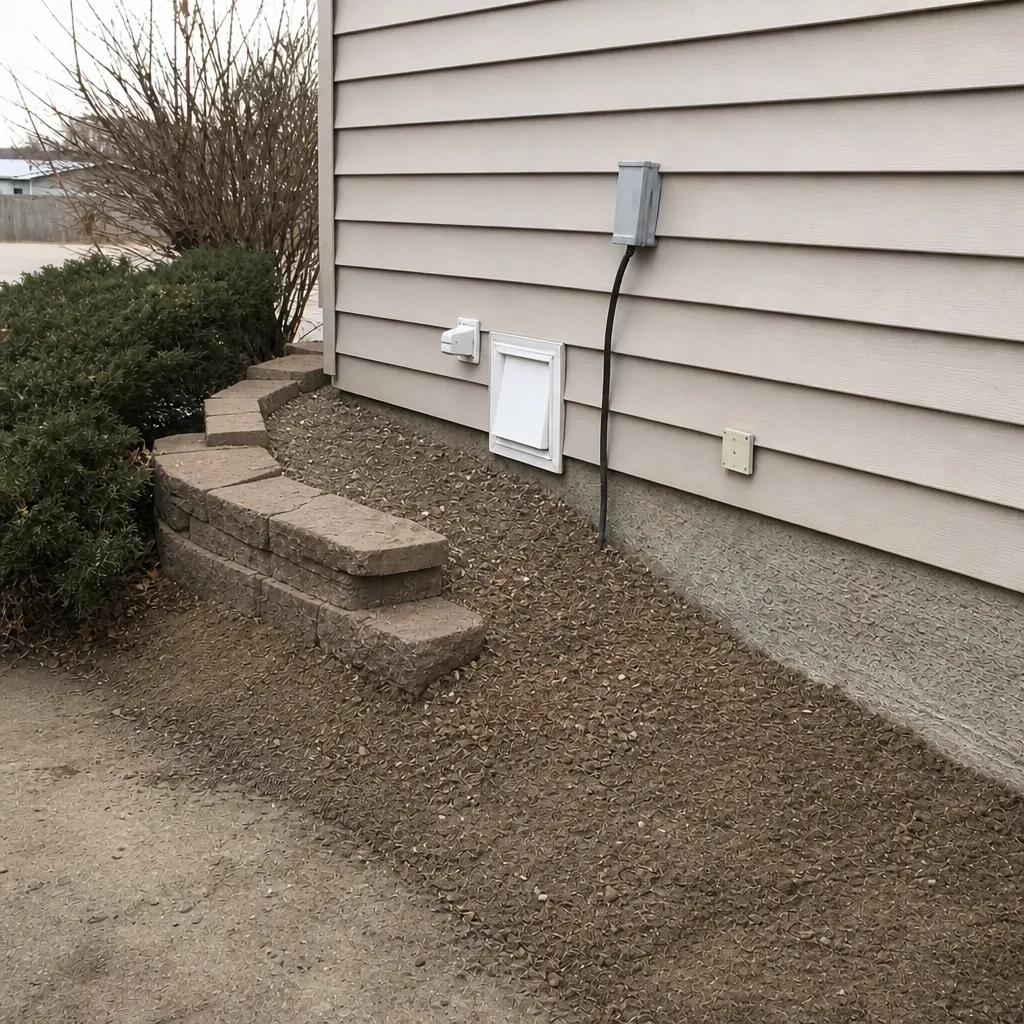
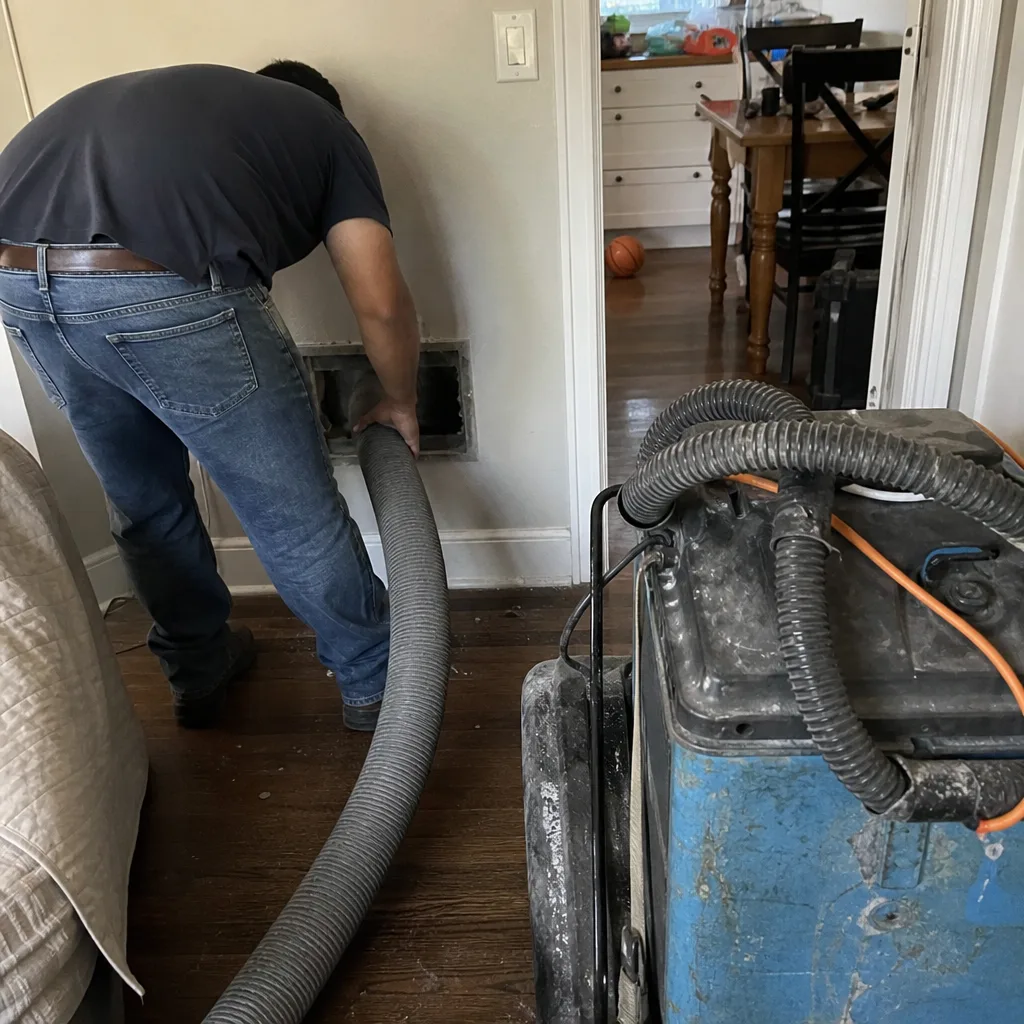
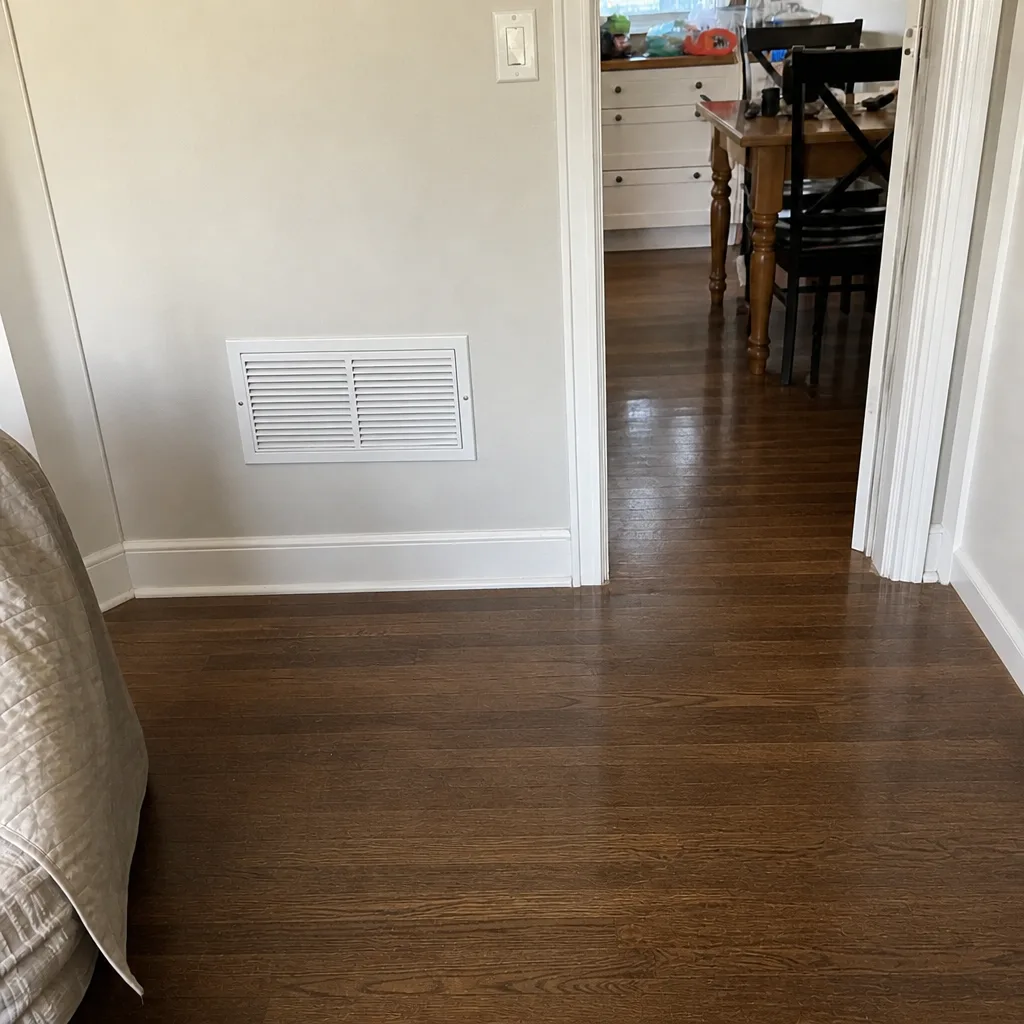
See the difference
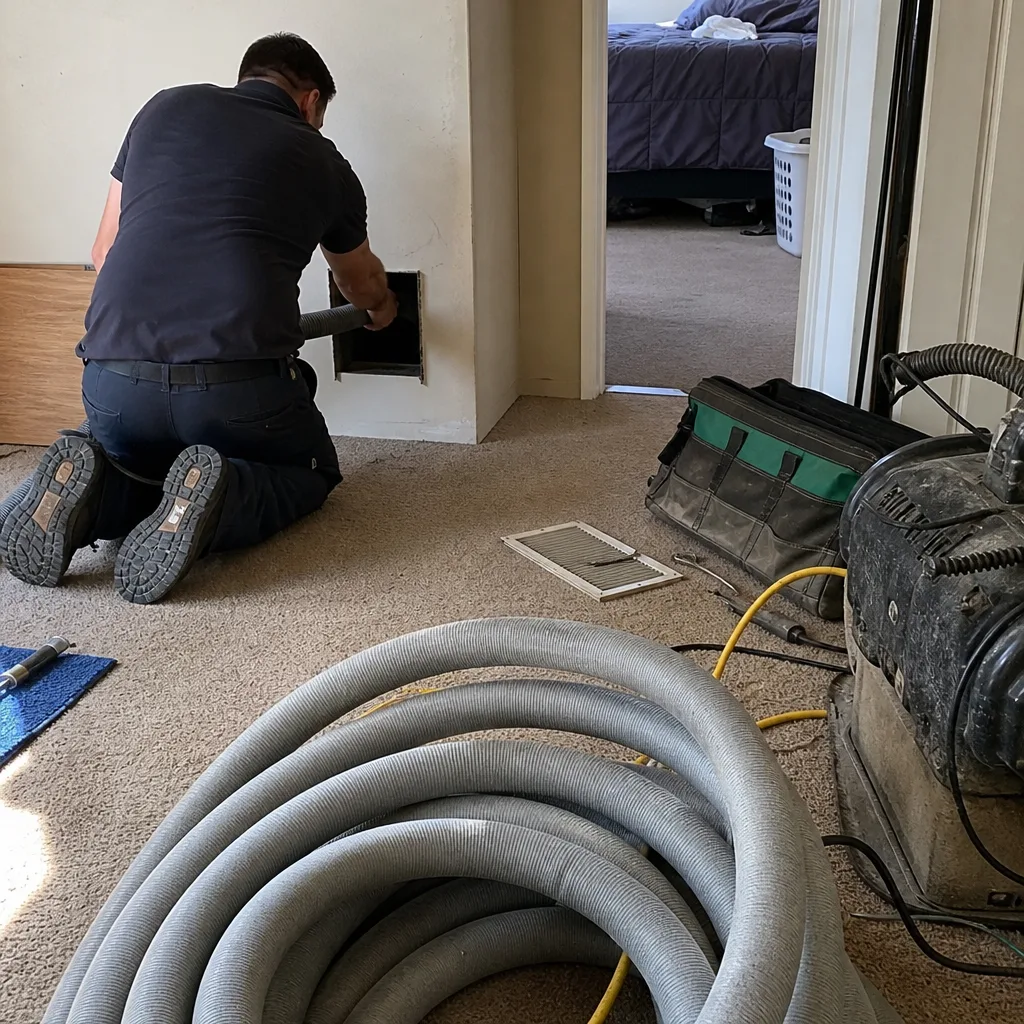 Before
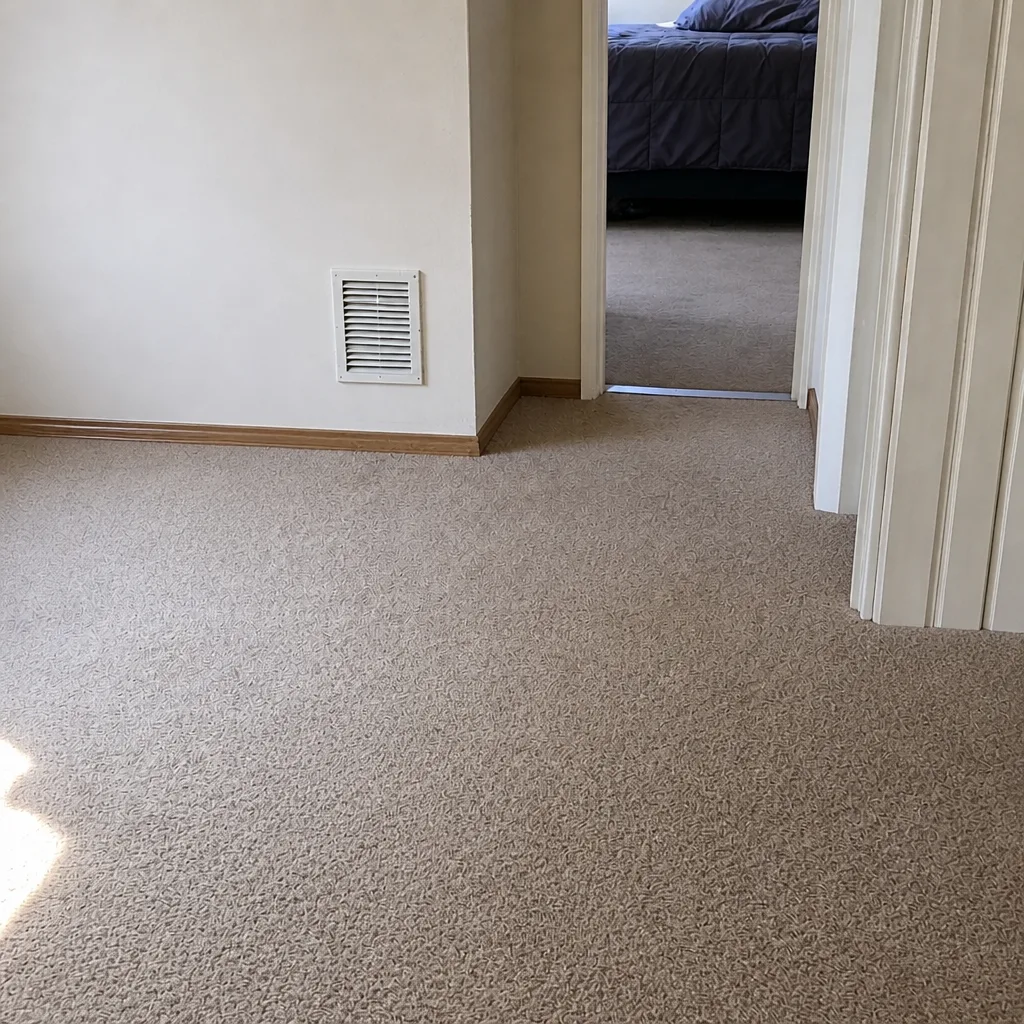 After
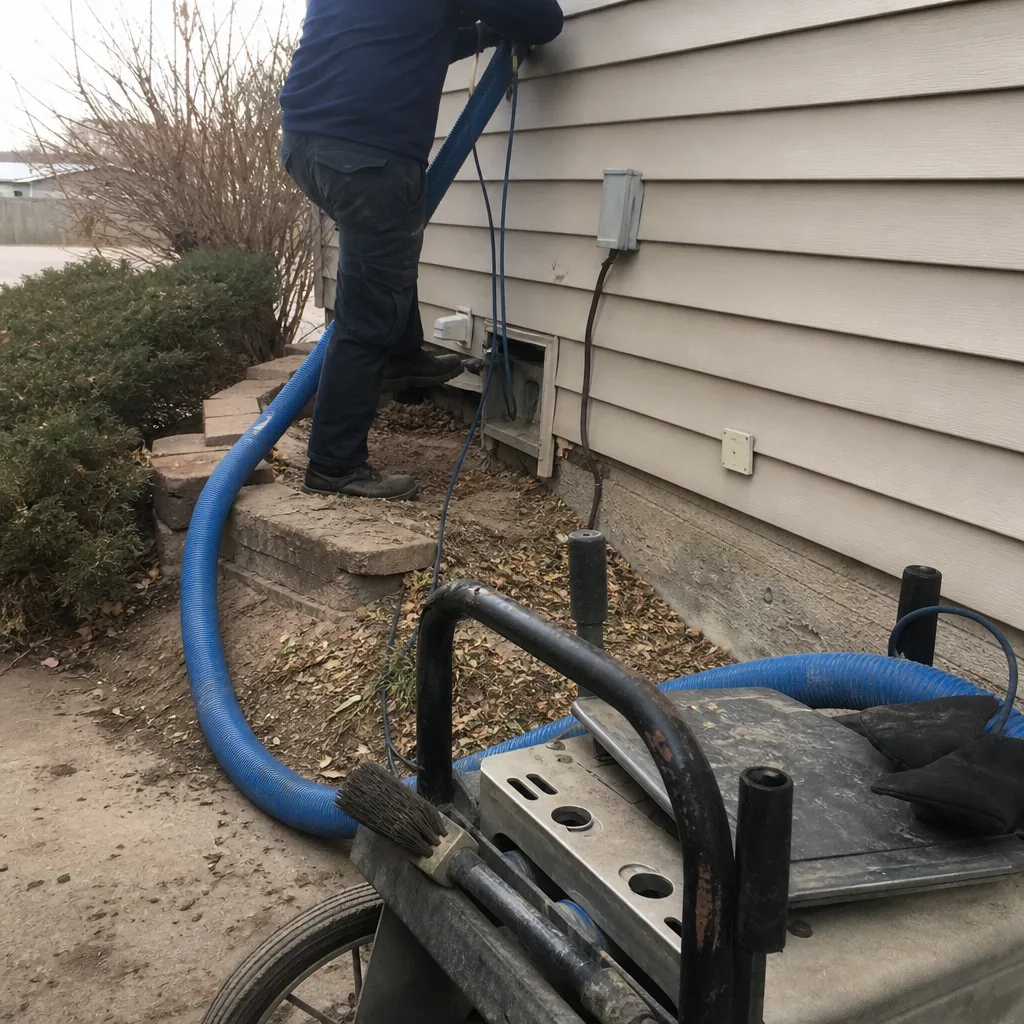 Before
 After
 Before
 After
When to Call a Professional
Call when the register-paper test shows a room is starved while the rest of the house is fine, when dust returns to the registers within days of cleaning, when a musty smell appears whenever the cooling runs, or when you’ve recently completed a renovation and the returns have been drawing construction dust. Call before you seal anything, and call before you run a vacuum into the ductwork. These are all cases where a professional assessment saves money and avoids making the problem worse.
Air Duct Cleaning Hampden offers free estimates in Hampden. Call (855) 658-4374. We answer 24/7. Fast dispatch from 7am to 7pm, Sunday through Friday.
Frequently Asked Questions
Air duct cleaning in Hampden is priced per system, not per vent, and the written estimate sets the final price. The range depends on the size of the system, whether repair and sealing are included, and whether HVAC cleaning or sanitizing is part of the work. Call (855) 658-4374 for an exact quote. Estimates are free.
Cheap quotes usually mean either a per-vent price that runs up fast, or a service that doesn’t include containment, HEPA filtration, or repair of the leaks that caused the problem in the first place. A quote that doesn’t include sealing, or that prices per vent, is likely to leave you with the same symptoms afterward. Our pricing is a single flat price per system agreed before work starts, and we take before-and-after photos of your own ducts so you can see what was actually done.
You should receive before-and-after photos of your own duct interiors, not stock images. A reputable service will also run the system with containment in place so you can observe the process, and will show you what the static pressure readings were before and after. If a company can’t document the work, that’s your answer. Call (855) 658-4374 for an estimate.
Most Hampden homes don’t need cleaning on a fixed schedule. The trigger is a symptom: visible dust at registers that returns quickly, musty smell during cooling, recent renovation, or a system that’s never been cleaned and shows heavy accumulation. A proper inspection tells you whether cleaning is warranted. Call us for a free estimate and we’ll tell you honestly if the system needs it.
Vacuuming the register face is fine. Running a shop vac or brush into the ductwork is not, because consumer equipment doesn’t contain the fine particles and redistributes debris deeper into the system. Replacing filters on schedule is genuinely helpful and we encourage it. Call (855) 658-4374 for an estimate if the symptoms persist.
Cleaning removes contamination from inside the ductwork. Sealing closes the leaks and gaps that let conditioned air escape and attic air enter. A duct system can need one, the other, or both, and a proper assessment tells you which. If a system leaks, cleaning alone won’t fix it. Call us for a free estimate to find out which you need.
The Bottom Line
Duct symptoms are diagnosable. Uneven airflow points to a crushed or disconnected run. Musty smell points to the evaporator coil and drain pan. Visible dust at the registers points to filter bypass or negative duct pressure. Cleaning addresses contamination; sealing addresses leaks; and the two are different problems with different fixes. Document what your system is doing, run the register-paper test, record the HVAC age and last filter change, and bring that list to the conversation. That’s how you get the right service instead of a generic one. Air Duct Cleaning Hampden can assess the whole system and recommend what actually needs doing. Call (855) 658-4374 for a free estimate. We answer 24/7, and fast dispatch runs from 7am to 7pm, Sunday through Friday.
Written by the team at Air Duct Cleaning Hampden.